
Beyond the Claim: Navigating Lawsuits and Harassment on Workers’ Comp

suing your employer for workers comp

Understanding Your Rights When Injured at Work

Suing your employer for workers comp is generally not allowed in California due to the “exclusive remedy rule.” This rule limits most injured workers to the workers’ compensation system, which provides benefits regardless of fault. However, you can file a civil lawsuit against your employer in specific, narrow situations:

  • Your employer intentionally injured you or committed assault.
  • Your employer fraudulently concealed a workplace hazard that caused your injury.
  • Your employer manufactured a defective product that injured you (dual capacity doctrine).
  • Your employer doesn’t carry workers’ compensation insurance as required by law.
  • A third party (not your employer or coworker) caused your injury.

When you’re hurt on the job, it’s easy to feel overwhelmed by medical bills, lost wages, and a complex legal system. The workers’ comp system is designed to help, but it’s often a maze of forms and deadlines. Crucially, it does not allow you to sue for pain and suffering or recover your full lost wages.

Understanding the exceptions to the exclusive remedy rule is critical. The difference between a workers’ comp claim and a civil lawsuit is significant, affecting the compensation you can receive and what you need to prove. While workers’ comp offers guaranteed medical care and partial wage replacement, a lawsuit can provide far greater compensation but requires proving your employer’s intentional wrongdoing or that another exception applies.
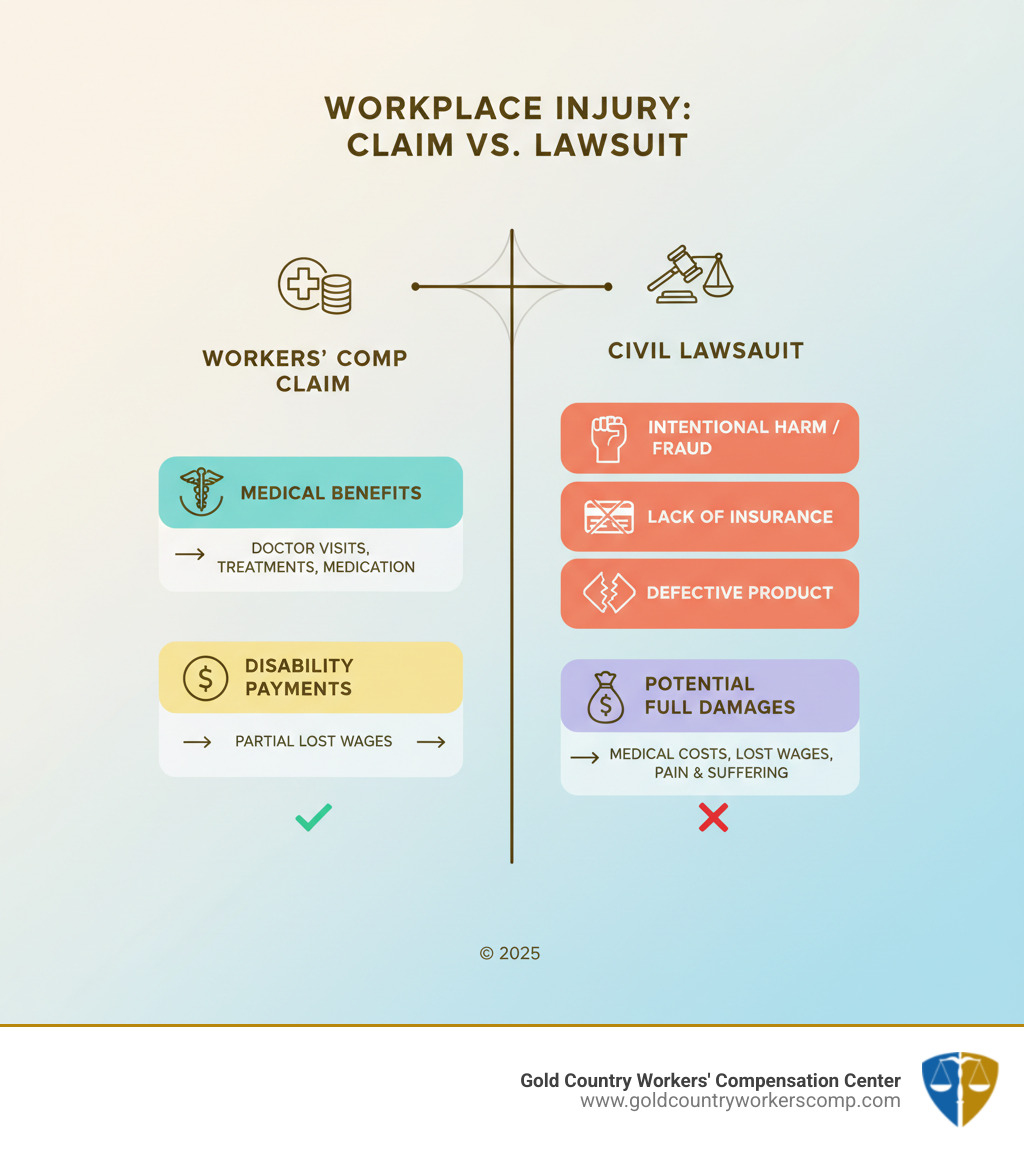
infographic showing two paths: left side shows workers comp claim process with medical benefits and disability payments, right side shows civil lawsuit path with requirements for intentional harm, fraudulent concealment, or lack of insurance, leading to potential full damages including pain and suffering - suing your employer for workers comp infographic

Understanding the “Exclusive Remedy” Rule in California

When you get hurt at work in California, the “exclusive remedy” rule is the foundation of your case. It’s why suing your employer for workers comp is not an option in most cases.

California’s workers’ compensation system is a trade-off. You receive guaranteed, no-fault benefits for medical treatment and lost wages. In exchange, your employer gets immunity from most lawsuits related to workplace injuries. This system provides a critical safety net, but the benefits are limited. You won’t receive compensation for pain and suffering, emotional distress, or punitive damages. Understanding these boundaries is essential. To learn more about how this system protects your rights, visit our page on California Workers Compensation Lawyer.

Can I sue my employer if they were just negligent?

This is a common question. If your employer was guilty of ordinary negligence—like failing to put out a warning sign for a wet floor—you generally cannot sue them. The exclusive remedy barrier applies even if their mistake led to your injury.

The line between ordinary negligence and gross negligence (a severe lack of care or reckless disregard for safety) can be blurry. Proving fault at this higher level is difficult and requires showing that your employer’s actions went far beyond simple carelessness. An experienced attorney can help determine if your case involves more than just ordinary negligence. For information on damages like pain and suffering, see our guide on Can Sue Pain Suffering.

Can I sue a coworker who caused my injury?

Generally, you cannot sue a coworker who injures you while acting within the scope of employment. The workers’ compensation system’s coworker liability shield protects them, just as it protects your employer.

However, exceptions exist. If a coworker intentionally assaults you or their actions were completely unrelated to their job duties, a civil lawsuit may be possible. These complex cases require careful investigation to determine if the coworker’s actions fall outside the protections of the workers’ comp system. If you’re unsure about your case, it’s best to consult an attorney. You can learn more about finding legal help on our Work Injury Attorney Near Me page.

When is Suing Your Employer for Workers Comp a Viable Option?

The exclusive remedy rule has several important exceptions. These are your legal pathways to suing your employer for workers comp outside the standard system. They are narrow and difficult to prove, but they can dramatically change your potential recovery.

gavel and hard hat - suing your employer for workers comp

These exceptions exist for employer conduct so egregious that limiting recovery to workers’ comp benefits would be unjust. Our Workers Compensation Attorneys California team can evaluate your case to see if you have grounds for a civil lawsuit.

Exception 1: Intentional Injury or Assault

If your employer deliberately hurts you, the exclusive remedy rule does not apply. This includes willful physical assault or creating a situation where injury is practically certain to occur. The challenge is proving intent—that your employer acted with a conscious desire to cause harm. If proven, you can sue for full damages, including pain and suffering and punitive damages. A Hurt at Work Lawyer can help you understand your options.

Exception 2: Fraudulent Concealment

You may have grounds for a lawsuit if your employer knew about a dangerous condition, deliberately hid it from you, and that concealment caused your injury. This is more than just failing to warn; it’s active deception, such as falsifying safety reports about toxic substances like asbestos. Proving fraudulent concealment requires showing your employer had actual knowledge of the hidden danger and intentionally concealed it.

Exception 3: Defective Product (Dual Capacity Doctrine)

Sometimes, your employer is also the manufacturer of a product that injured you. Under the dual capacity doctrine, you may be able to sue them for product liability as a manufacturer, separate from their role as your employer. This is common with defective machinery, such as power presses where safety guards were knowingly removed. These cases require proving the injury stemmed from a product defect, not just a workplace condition. A Workplace Injury Lawyer can help steer this complex doctrine.

What if My Employer Lacks Insurance? The Path to Suing Your Employer for Workers Comp

California law requires all employers to carry workers’ comp insurance. If your employer is uninsured, the exclusive remedy rule does not protect them. This is a clear situation where suing your employer for workers comp is a viable option.

You can still receive benefits through the Uninsured Employers Benefit Trust Fund (UEBTF). Crucially, you can also file a civil lawsuit against your uninsured employer for full damages, including pain and suffering. In such a lawsuit, the burden of proof may shift to your employer, and they face severe penalties. Our Workers Comp Lawsuit Help resources can guide you through this process.

Exception 4: Suing a Negligent Third Party

Even if you can’t sue your employer, you may have a claim against a negligent third party. A third party is anyone other than your employer or a coworker. Common examples include:

  • A general contractor or subcontractor on a construction site.
  • The manufacturer of defective equipment that caused your injury.
  • An at-fault driver in a car accident that occurred while you were working.

A third-party lawsuit allows you to recover damages like pain and suffering, which workers’ comp doesn’t cover. While your employer’s insurer may place a lien on your recovery to be reimbursed for benefits paid, a third-party claim often results in a significantly higher total recovery. A Workplace Accident Attorney can help manage both claims.

Workers’ Comp Benefits vs. Lawsuit Damages: A Comparison

Understanding the difference between workers’ compensation benefits and civil lawsuit damages is crucial for your financial future. Workers’ comp provides a valuable but limited safety net. A lawsuit, if you qualify, can provide much fuller compensation.

Think of it this way: workers’ comp covers immediate needs with caps on recovery, while a lawsuit can address the total impact of your injury, including pain and suffering.

Feature Workers’ Compensation Benefits Civil Lawsuit Damages
Proof of Fault Not required (no-fault system) Required (employer’s intentional wrongdoing, gross negligence, third-party fault)
Medical Care Covered (all reasonable and necessary treatment) Covered (all past and future medical expenses)
Lost Wages Partial (typically 2/3 of average weekly wage, up to a cap) Full (past and future lost earnings, including loss of earning capacity)
Pain & Suffering Not covered Covered
Emotional Distress Not covered Covered
Punitive Damages Not covered Possible (in cases of extreme misconduct)
Disfigurement Limited coverage (via permanent disability ratings) Covered
Loss of Consortium Not covered Covered (for spouse/family)
Legal Process Administrative claim with Workers’ Compensation Appeals Board Civil court system
Timeline Generally faster initial benefits Can be much longer and more complex

What Damages Can Be Recovered in a Lawsuit?

If you can sue your employer for workers comp under an exception or pursue a third-party claim, the available damages expand significantly.

  • Economic damages cover your financial losses, including all past and future medical bills, full lost wages, and diminished future earning capacity.
  • Non-economic damages address the human cost of your injury. This includes pain and suffering, emotional distress, disfigurement, and loss of enjoyment of life.
  • Punitive damages are rare and are meant to punish an employer for malicious or fraudulent conduct, not to compensate you for losses.

The difference between these damages and standard workers’ comp benefits can be life-changing. Our team can help you Sue for Damages as a Result of Your Injury.

Common Defenses Employers Use in Injury Lawsuits

When you file a lawsuit, expect the defense to fight back. Common defense strategies include:

  • Comparative negligence: Arguing you were partially at fault to reduce your compensation.
  • Employee misconduct: Claiming you were injured because you violated safety rules.
  • Intoxication defense: Alleging that drugs or alcohol caused the accident.
  • Injury outside scope of employment: Arguing you weren’t “on the clock” when the injury occurred.
  • Statute of limitations: Claiming you missed the legal deadline to file your lawsuit.
  • Lack of intent or knowledge: Denying they knew about a hazard or intended to cause harm in cases involving exceptions to the exclusive remedy rule.

Navigating these defenses requires an experienced legal team that knows how to build a compelling case and counter defense tactics.

After a work injury, the steps you take immediately are critical for protecting your rights, whether you file a standard workers’ comp claim or have grounds to sue your employer for workers comp.

person filling out DWC-1 form - suing your employer for workers comp

Missing a step can jeopardize your claim, so act swiftly.

1. Report Your Injury Immediately

This is the most important first step. You must notify your employer in writing within 30 days of your injury. Even minor injuries should be reported, as they can worsen over time.

  • Notify your supervisor or designated representative.
  • Request and fill out an official incident report.
  • Provide accurate details: when, where, and how the injury occurred.
  • Get contact information for any witnesses.

Prompt reporting establishes a clear timeline for your claim. For more on this, see our First Step Take Injury Important page.

2. Seek Prompt Medical Treatment

Your health is the priority. Get medical attention right away, even if the injury seems minor. A doctor’s diagnosis and treatment plan create the official medical records that are critical evidence for your claim.

  • Go to the emergency room for severe injuries.
  • Follow all of your doctor’s instructions and restrictions.
  • Keep detailed records of all appointments, diagnoses, and treatments.
  • Tell every provider that your injury is work-related.

Delaying treatment can make it harder to prove your injury was work-related. If you’ve been denied care, learn about your options on our Medical Treatment Denied page.

3. File an Official Claim Form

Your employer must give you a Workers’ Compensation Claim Form (DWC-1) within one working day of you reporting your injury.

  • Fill out the DWC-1 form accurately and return it to your employer promptly.
  • Your employer then forwards it to their insurance carrier.
  • The insurer has 90 days to accept or deny your claim. During this time, they must authorize up to $10,000 in medical care.

This form officially starts your claim. If your employer fails to provide it, you can find the official DWC-1 form on the state’s website. Learn more about Making a Workers Comp Claim.

Frequently Asked Questions about Suing an Employer in California

Navigating a work injury claim raises many questions, especially about legal action beyond standard workers’ compensation. Here are answers to some of the most common concerns.

What is the statute of limitations for suing my employer for a work injury?

Filing deadlines are strict and vary by claim type.

  • For a workers’ compensation claim, you generally have one year from the date of injury to file the DWC-1 form. You should also report the injury to your employer within 30 days.
  • For a personal injury lawsuit against your employer (under an exception) or a third party, you typically have two years from the date of injury to file in civil court.

The “findy rule” can sometimes extend these deadlines if your injury or its connection to work wasn’t immediately apparent, but relying on this is risky. The best course of action is to act promptly to protect your rights.

Do I lose my workers’ comp benefits if I file a lawsuit?

No. Filing a civil lawsuit does not automatically disqualify you from receiving workers’ comp benefits. You can often pursue both claims at the same time (concurrent claims). You can receive medical care and disability payments from workers’ comp while your lawsuit proceeds.

However, California law prevents “double recovery.” If you win a settlement or judgment in your lawsuit, the workers’ comp insurance carrier has a right to be reimbursed for the benefits they paid. This is called an employer’s lien. While this reduces your net lawsuit recovery, the total compensation is often still much higher than from workers’ comp alone.

What evidence is needed for a successful lawsuit against an employer?

The burden of proof is on you when you sue your employer for workers comp under an exception. A strong case is built on solid evidence, including:

  • Medical Records: To document the extent of your injuries and connect them to the workplace incident.
  • Accident Reports: Official reports filed with your employer or other agencies create a contemporaneous record of the event.
  • Witness Statements: Testimony from coworkers who saw the incident or can speak to workplace hazards.
  • Photos and Videos: Visual evidence of the accident scene, defective equipment, or your injuries.
  • Employer’s Records: Internal emails, safety reports, or maintenance logs can prove your employer’s knowledge of a hazard.
  • Expert Testimony: Medical, safety, or engineering experts can provide professional opinions to support your claim.
  • Employment Records: Your job description and wage history help establish your financial losses.

Gathering this evidence can be overwhelming. An experienced legal team knows what to look for and how to use it to build the strongest possible case.

The legal landscape for workplace injuries in California is complex. Between the “exclusive remedy” rule and its narrow exceptions, it’s easy to feel overwhelmed while also dealing with pain and financial stress.

The truth is that early legal guidance makes a significant difference. The sooner you consult with an experienced attorney, the better your chances of meeting critical deadlines and pursuing all available compensation, whether through a workers’ comp claim or a civil lawsuit.

That’s where we come in. At Gold Country Workers’ Compensation Center, Kim LaValley and Kyle Adamson have nearly 50 years of combined experience helping injured workers in Roseville, Nevada City, and throughout California. We are committed to ensuring you understand your rights and receive the compensation you deserve.

We believe in early intervention. By contacting us soon after your injury, we can help you avoid common mistakes, gather crucial evidence, and build a strong case from the start. We offer a no-fee initial consultation to give you honest answers about your situation without any upfront cost.

Don’t let uncertainty prevent you from exploring your options. For more information, visit our comprehensive guide: California Workers Compensation Lawyer.

If you have questions about a work injury, contact us today. We’re here to help you move forward with confidence.

The Ultimate List of Workers’ Compensation Law Firms

Workers compensation law firm

Finding the Right Workers’ Compensation Law Firm

When you’ve been hurt at work, finding the right Workers compensation law firm can feel overwhelming. You need expert help to steer the complex system and protect your future. Here’s what to look for in a top firm:

  • Specialized Expertise: Look for attorneys who are Board-Certified Specialists in workers’ compensation law. This shows deep knowledge of the field.
  • Proven Experience: A firm with decades of combined experience means they’ve handled many cases like yours. Some firms have nearly 100 years of combined experience.
  • Client Success Record: Check their track record of significant settlements and high success rates. Many firms boast recovering millions for injured clients.
  • No Upfront Cost: Reputable firms work on a contingency fee basis. This means you pay no fees unless they win your case.
  • Client-Focused Support: A good firm treats you like family. They should offer dedicated teams, clear communication, and bilingual support if needed.

A workplace injury can turn your life upside down. You face lost wages, medical bills, and confusing paperwork. The California workers’ compensation system, in particular, has many rules and deadlines. You don’t have to go through it alone. This guide is here to simplify your search, helping you find the legal partner you need to secure your benefits and peace of mind.

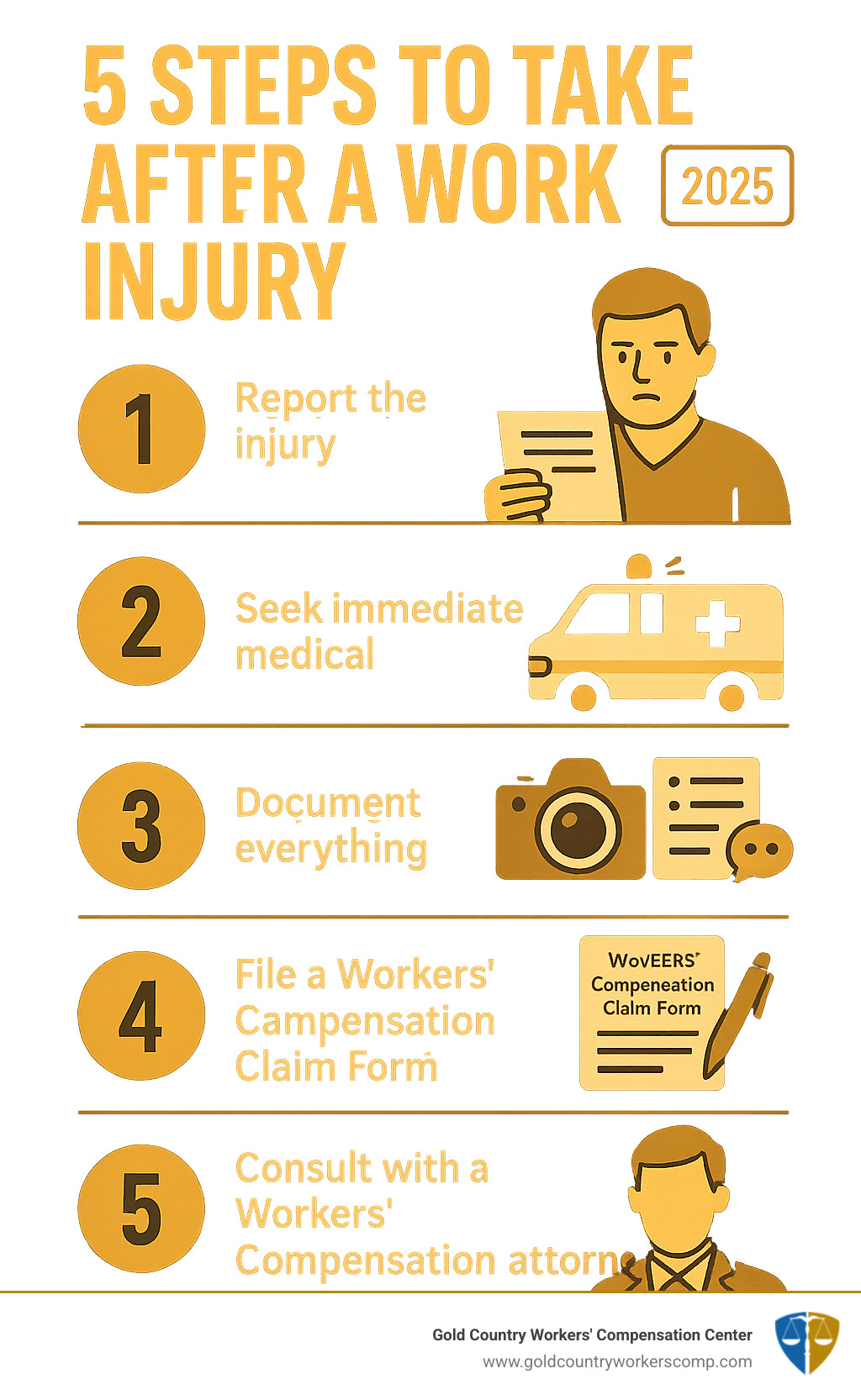
Infographic detailing 5 immediate steps to take after a work injury: 1. Report the injury to your employer (in writing, within 30 days). 2. Seek immediate medical attention. 3. Document everything (photos, witness info, symptoms). 4. File a Workers' Compensation Claim Form (e.g., DWC-1). 5. Consult with a Workers' Compensation attorney. - Workers compensation law firm infographic

What is Workers’ Compensation and What Does It Cover?

doctor examining a patient's back injury - Workers compensation law firm

Think of workers’ compensation as your safety net when things go wrong at work. It’s a state-mandated insurance program that steps in when you get hurt or sick because of your job. The beauty of this system? It’s no-fault, which means it doesn’t matter if you made a mistake, your boss was careless, or a coworker caused the accident. If you’re injured at work, you’re covered.

This system exists to protect you financially when you can’t work and need medical care. Without it, a simple workplace injury could devastate your family’s finances.

Medical benefits are the cornerstone of workers’ compensation. Every reasonable and necessary medical treatment related to your work injury gets covered. This includes doctor visits, hospital stays, surgeries, prescription medications, physical therapy, and even chiropractic care. You won’t be stuck choosing between getting better and paying your bills.

When your injury keeps you from working, wage replacement benefits kick in. You’ll receive about two-thirds of your average weekly wage through what’s called temporary disability benefits. These payments continue while you’re recovering and unable to work.

If your injury leaves lasting effects, permanent disability benefits provide compensation for the long-term impact on your earning capacity. Sometimes injuries change everything, and the system recognizes that reality.

Vocational rehabilitation becomes crucial when you can’t return to your old job. This benefit covers job retraining, resume help, and job placement services to get you back on your feet in a new career.

In the heartbreaking case of a work-related death, death benefits provide financial support to surviving family members, including funeral costs and ongoing support for spouses and children.

Understanding all these benefits can feel overwhelming. That’s why we’ve created a detailed resource on Understanding Workers Comp Benefits to guide you through every aspect.

Common covered injuries include slip and falls, repetitive stress injuries, machine-related accidents, and occupational illnesses that develop over time.

Types of Injuries and Illnesses Covered

Workplace injuries come in many forms, and workers’ compensation covers more than you might expect.

Acute injuries happen in an instant – a fall from a ladder, a cut from machinery, or being struck by falling objects. These sudden, dramatic injuries are what most people think of when they hear “workplace accident.”

Repetitive motion injuries develop slowly over months or years. Carpal tunnel syndrome from constant typing, back strain from repeated lifting, or shoulder problems from overhead work all fall into this category. These injuries can be just as debilitating as sudden accidents, even though they sneak up on you.

Occupational diseases result from workplace exposure to harmful substances. Respiratory problems from chemical fumes, skin conditions from irritating materials, or even certain cancers linked to workplace toxins are covered. These conditions might not show up until years after exposure.

Psychological trauma from severe workplace incidents or chronic job-related stress can also qualify for benefits. When work conditions cause depression, anxiety, or PTSD, the workers’ compensation system may provide coverage.

Secondary injuries add insult to injury – literally. When you favor one side of your body due to an initial injury, you might develop new problems elsewhere. Using crutches could strain your shoulders, or changing how you walk might cause hip pain. These related injuries are also compensable.

Toxic exposure cases often involve long-term health effects from chemicals, asbestos, or other dangerous materials encountered at work.

For comprehensive information about injury types and compensation, visit our page on Workers Comp Injury and Compensation.

What to Do Immediately After a Workplace Injury

The minutes and hours after a workplace injury are crucial. Taking the right steps protects your health and your legal rights.

Report the injury to your employer immediately, and follow up with written notice. California law, specifically Section 5400 of the California Labor Code, requires you to notify your employer within 30 days of the injury or when you first realize it’s work-related. Even if you mention it verbally to your supervisor, always provide written documentation. This written notice proves you met this critical deadline.

Seek medical treatment right away, even if the injury seems minor. Don’t worry about who’s paying – that’s your employer’s responsibility once you file your claim. If your employer doesn’t immediately acknowledge your injury or arrange medical care, get treatment anyway. Your health comes first, and a Workers compensation law firm can sort out the details later.

Document everything you can remember about the incident. Write down the date, time, and exact location where you were injured. Record what you were doing and how the injury happened. Get names and contact information from any witnesses. Take photos of the accident scene, your injuries, and any dangerous conditions that contributed to the incident.

Keep a detailed log of your symptoms, medical appointments, and medications. Save copies of all medical reports, bills, and any communications with your employer or their insurance company. This documentation becomes invaluable if disputes arise later.

File a claim form (DWC-1) as soon as possible. Your employer must provide this form within one working day after you report your injury. Fill it out accurately and completely, then return it to your employer. This form officially starts your workers’ compensation claim process.

These immediate steps create the foundation for a successful claim. For a complete step-by-step guide, check out How to Make a Workers Comp Claim in California.

Why You Need an Expert Workers Compensation Law Firm

lawyer confidently speaking with a client - Workers compensation law firm

“Do I really need a lawyer for my workers’ comp claim?” It’s one of the most common questions we hear, and honestly, it’s a smart thing to ask. After all, workers’ compensation is supposed to be a “no-fault” system designed to help injured workers. So why can’t you just handle it yourself?

Here’s the reality: while the system was created to help you, it’s become incredibly complicated over the years. Think of it like trying to assemble furniture with instructions written in a foreign language – technically possible, but why put yourself through that stress when you’re already dealing with an injury?

Navigating the maze of complexity is where most people get lost. The California workers’ compensation system has layers upon layers of rules, specific forms that must be filled out perfectly, and deadlines that can’t be missed. One small mistake or missed deadline can derail your entire claim. An experienced Workers compensation law firm knows these rules like the back of their hand and can guide you through each step without the guesswork.

Fighting back against claim denials is another crucial reason you need professional help. Insurance companies aren’t in the business of giving money away – they’re looking for reasons to deny or minimize your claim. They might say your injury was pre-existing, that it didn’t happen at work, or that you don’t need the treatment your doctor recommended. When you’re dealing with pain and trying to recover, the last thing you need is to battle a team of insurance professionals who do this for a living.

Maximizing your benefits is something most people don’t realize they need help with until it’s too late. Insurance companies often make quick, low-ball settlement offers to injured workers who don’t know better. They’re counting on you not knowing what you’re truly entitled to. A skilled attorney will make sure you receive every benefit available to you, from complete medical coverage to proper wage replacement and future care needs.

Insurance company tactics can be surprisingly aggressive. Adjusters might call you repeatedly, asking leading questions designed to get you to say something that hurts your case. They might pressure you to return to work before you’re medically ready, or try to get you to accept an inadequate settlement. Having legal representation means these conversations go through your attorney instead of directly to you.

Most importantly, hiring a Workers compensation law firm gives you peace of mind during one of the most stressful times in your life. When you’re injured, your energy should go toward healing, not wrestling with paperwork and insurance companies. Professional legal help lets you focus on getting better while someone else handles the legal complexities.

For more detailed insights into the value of professional representation, visit our page on Why Hire a Workers Compensation Attorney?.

The difference between handling a claim alone versus working with experienced attorneys is dramatic:

Handling a Claim Alone With a Workers Compensation Law Firm
You’re learning as you go, making mistakes along the way Decades of experience guide every decision
Insurance companies see you as an easy target They know they’re dealing with professionals who won’t back down
You might miss deadlines or file incorrect paperwork All deadlines met, all forms filed correctly
You accept whatever settlement they offer Every settlement is negotiated for maximum value
You’re on your own if complications arise Expert support through every challenge

Services Offered by a Top Workers Compensation Law Firm

When you work with a professional Workers compensation law firm, you’re getting much more than just someone to fill out paperwork. You’re getting a complete support system designed to handle every aspect of your case.

Case evaluation is where it all starts. A good firm will sit down with you and carefully review every detail of your injury and situation. They’ll look at your medical records, understand how the injury happened, and assess the full scope of what you’re dealing with. This isn’t a quick five-minute conversation – it’s a thorough analysis that sets the foundation for your entire case.

Filing paperwork might sound simple, but there’s an art to it. Every form needs to be completed accurately, every deadline must be met, and every piece of documentation needs to be submitted properly. Your attorney handles all of this, ensuring nothing falls through the cracks.

Gathering evidence is crucial for building a strong case. This means collecting medical records, getting witness statements, documenting the accident scene, and building a comprehensive picture of how your injury occurred and how it’s affecting your life. Your legal team knows exactly what evidence will be most persuasive and how to obtain it properly.

Negotiating settlements is where experience really pays off. Insurance companies make their living by paying out as little as possible. Your attorney knows the true value of your case and won’t let you settle for less than you deserve. They understand the negotiation process and have the skills to push back when offers are inadequate.

Representing you at hearings becomes necessary if your case goes before a workers’ compensation judge. This is technical, legal territory where having professional representation isn’t just helpful – it’s essential. Your attorney will present your case effectively and advocate for your rights in front of the judge.

Managing appeals is unfortunately sometimes necessary when initial decisions don’t go your way. The appeals process has its own set of rules and procedures, and having someone who understands this system can make the difference between success and failure.

Third-party claims are an often-overlooked opportunity for additional compensation. If someone other than your employer contributed to your injury, you might have a separate legal claim against them. Your attorney will identify these opportunities and pursue them on your behalf.

If you’re wondering whether professional help is right for your situation, consider scheduling a Free Workers Comp Case Consultation to discuss your specific circumstances with no obligation.

How Much Does a Workers Compensation Law Firm Cost?

One of the biggest concerns people have about hiring an attorney is cost. The good news is that workers’ compensation attorneys work differently than most other lawyers – they work on a contingency fee basis.

No upfront costs means you don’t pay anything to get started. There are no consultation fees, no retainer fees, and no hourly charges. This removes the financial barrier that might otherwise prevent you from getting the help you need when you’re already dealing with lost wages and medical bills.

Percentage of settlement is how attorneys get paid in workers’ compensation cases. Instead of charging you by the hour, they take a percentage of whatever they recover for you. This means they only get paid if they win your case – their success is directly tied to your success.

California fee regulations keep attorney fees reasonable and fair. The state regulates how much attorneys can charge for workers’ compensation cases, ensuring you’re not taken advantage of during a vulnerable time.

No fee unless you win is the bottom line. If your attorney doesn’t recover benefits for you, you don’t owe them anything. This arrangement gives you access to professional legal help without financial risk.

Cost-effective representation often pays for itself many times over. The difference between what you might recover on your own versus what an experienced attorney can recover for you typically far exceeds the attorney’s fee. You end up with more money in your pocket, even after paying legal fees.

This fee structure makes professional legal help accessible to everyone, regardless of their financial situation. You get experienced representation without having to worry about how you’ll pay for it upfront.

How A Workplace Accident Attorney Can Help With Workers Comp Claims

Work Injury Lawyer in Roseville

Hiring a workplace accident attorney is the best way to ensure the success of your California workers’ comp claim. The period after a work-related injury can be extremely difficult for workers and their families.  In the foothills from Auburn through Nevada County, many workers do primarily physically demanding jobs, and those types of jobs produce many injuries.

Many workers opt to file their workers’ comp claims on their own. Although this is possible it is not recommended. The claims process is extremely complicated and can be difficult to navigate alone. 

A California workers comp attorney can help ensure you receive the workers compensation claims you are entitled to. They offer numerous additional services that can reinforce the success of a claim. 

The following article will highlight the reasons why hiring a workplace accident attorney is so important following a work-related injury. If you have any further questions please contact Gold Country Workers Comp Center

We can also help you schedule a consultation with an experienced workers comp lawyer by phone or in-person in Nevada County. 

When To Hire A Workers’ Comp Lawyer

Whenever a work-related injury occurs it should be reported quickly to your manager or supervisor. They will then provide you with documents that must be filled out. The paperwork requires that you detail how the accident occurred. 

It is important to still report the injury in writing even if it was cared for without seeing a doctor on a first-aid basis. In this case, you need not file a formal workers’ compensation claim. 

When describing the accident, it is important to provide as much detail as possible. If your injury was serious enough to require further medical care beyond first aid or more than three days off work,  you qualify for workers’ comp benefits. 

Workers’ compensation is a form of insurance paid by employers. They do this to cover the expenses from workplace injuries. 

Numerous factors including the severity of the injury, medical expenses, amount of lost wages, and more will determine the number and amount of benefits a person is entitled to. 

A workplace accident attorney is an attorney educated in the field of workers’ compensation law. They use their experience in the field along with their dedication to protecting their clients through the claims process. 

A workers’ comp lawyer assists you through every step of the workers’ comp process that can be complicated without their representation. They offer knowledgeable counsel following a work-related injury to ensure clients’ preparedness. 

In addition to these services, a workplace accident attorney can negotiate with the insurance companies to ensure you receive the benefits you are entitled to. They can also help if a settlement is not reached and litigation becomes necessary. 

If your workers’ comp claim goes to trial, the workers’ comp attorney to prepare the essential documents, testimonies, and more to ensure success. 

Work With A Workplace Accident Attorney

For the reasons stated above, it is clear to see why working with a workers’ comp attorney is so important. You can count on Gold Country Workers Comp Center to help you through the workers’ compensation claim. 

Contact Gold Country today by calling us at 530-362-7188 to learn how we can help you get the benefits you deserve. 

Follow us: Facebook | LinkedIn

Accident Attorney Workplace