

Why Chemical Exposure Workers Compensation Matters for Your Health and Livelihood
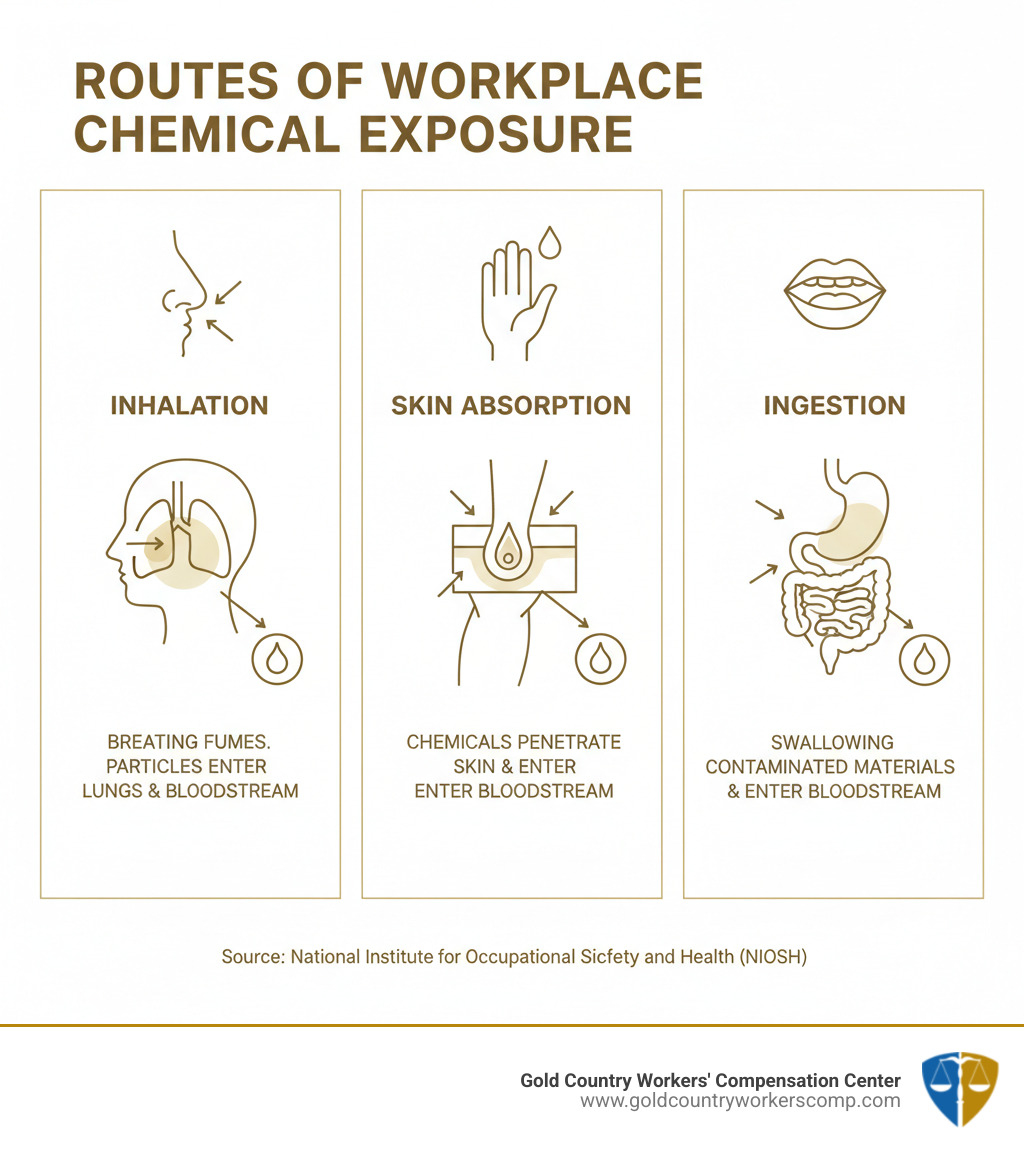
Chemical exposure workers compensation provides critical benefits when you suffer illness or injury from hazardous substances at work. Whether you inhaled toxic fumes, absorbed chemicals through your skin, or swallowed contaminated materials, you have legal rights to medical care and financial support.
Quick Answer: What Chemical Exposure Workers Compensation Covers
- Medical Treatment: 100% coverage for doctor visits, medications, and specialized care related to your chemical exposure
- Lost Wages: Temporary disability benefits while you recover and can’t work
- Permanent Disability: Compensation if your exposure causes lasting health problems
- No-Fault System: You don’t need to prove your employer did anything wrong to receive benefits
Exposure to toxic substances at work is a serious risk. With around 650,000 chemical products in U.S. workplaces, the dangers aren’t always obvious. Some cause immediate harm, while others damage your health slowly over months or years.
You might develop respiratory issues, skin conditions, neurological damage, or even cancer. In 2023 alone, private industry employers reported 2.6 million nonfatal workplace injuries and illnesses, with many tied to chemical exposure.
The workers’ compensation system exists to protect you, but these claims can be complex. Insurance companies may dispute the cause of your illness, and strict legal deadlines can jeopardize your case if you don’t know the rules.
This guide walks you through everything you need to know—from understanding your rights to filing a claim and getting the benefits you deserve. You’ll learn the steps to protect yourself and your family’s financial future.
Understanding Chemical Exposure and Its Health Impact
While many people think of workplace injuries as sudden accidents, some of the most serious hazards come from chemical exposure. This can happen suddenly, like a chemical spill, or gradually from breathing in dust or fumes day after day.
Both types of exposure can make you seriously ill and qualify you for chemical exposure workers compensation benefits. However, proving that your health problems came from work can be complicated, especially when symptoms don’t appear for months or years.
The real challenge with these claims isn’t getting benefits for an immediate chemical burn. The harder cases involve chronic illnesses—like a construction worker who develops lung disease after years of inhaling silica dust, or a factory employee diagnosed with cancer decades after benzene exposure.
If you’ve suffered an illness from hazardous exposures at work in California, you may be entitled to workers’ compensation benefits, whether the exposure was a single incident or occurred over time.

Common Harmful Chemicals Found in the Workplace
After nearly 50 years of helping workers in Grass Valley, Roseville, and Nevada City, we’ve seen how almost any workplace can expose employees to dangerous chemicals. Construction sites, farms, hospitals, auto shops, and even offices can harbor hazardous substances.
- Asbestos: Found in older buildings, it releases fibers when disturbed that cause lung disease and mesothelioma, often decades later.
- Benzene: Used in refineries and chemical plants, this liquid can cause blood disorders and increase cancer risk.
- Lead: A concern in construction and manufacturing, lead damages the nervous system, kidneys, and reproductive organs.
- Pesticides: A risk for agricultural workers, these can cause immediate respiratory issues and long-term nervous system damage.
- Solvents: Found in paints, cleaners, and adhesives, they can be inhaled and may damage the neurological system, lungs, and skin over time.
- Acids: Used in labs and manufacturing, these corrosive substances can cause severe chemical burns on contact.
- Silica dust: Created when cutting materials like concrete or stone, these tiny particles scar the lungs and cause silicosis, a progressive lung disease.
Your employer has a legal duty to inform you about chemicals in your workplace, but not all employers comply.
How Chemical Exposure Can Affect Your Health
The health effects of chemical exposure vary based on the chemical, the dose, the duration, and your individual health. Some people react severely while others seem fine for years before symptoms emerge.
- Respiratory diseases: Inhaling toxic fumes, dusts, or gases can lead to asthma, COPD, or lung cancer. A study of respiratory-related workers’ compensation claims in Ohio found over 30% were linked to chemical exposure.
- Skin conditions: Contact with irritating substances can cause rashes, dermatitis, or severe chemical burns. Some chemicals can also be absorbed through the skin and cause internal damage.
- Neurological damage: Prolonged exposure to heavy metals or solvents can lead to headaches, memory loss, and permanent brain damage.
- Cancer: Many workplace chemicals are known carcinogens. Asbestos causes mesothelioma, while benzene is linked to leukemia. These cancers often appear 10 to 30 years after exposure.
- Organ damage: The liver and kidneys are especially vulnerable as they filter toxins from the body. Severe exposure can lead to organ failure or chronic disease.
- Blood disorders: Chemicals like benzene can cause anemia and bone marrow damage, which may develop gradually.
Because many of these conditions don’t appear immediately, proving the link between your illness and past workplace exposure requires diligent record-keeping and expert medical opinions. Documenting everything is crucial, even if you feel fine now.
Your Rights and Your Employer’s Responsibilities
California has some of the strongest workplace safety regulations in the country, designed to protect you from toxic chemicals. Understanding these rules helps you spot violations and is essential for a successful chemical exposure workers compensation claim.
What is OSHA’s Role in Regulating Chemical Exposure?
The Occupational Safety and Health Administration (OSHA), and its California counterpart Cal/OSHA, sets the ground rules for chemical safety. Their mission is to keep workers safe from toxic exposures.
- Permissible Exposure Limits (PELs): OSHA establishes PELs, which are legal ceilings for the amount of a substance allowed in workplace air. Your employer cannot legally expose you to levels exceeding these limits.
- Hazard Communication Standard: This “Right-to-Know” law requires employers to identify every chemical hazard in the workplace and inform you about them.
- Employee Training: Your employer must teach you about the chemicals you work with, their dangers, how to protect yourself, and what to do in an emergency.
- Personal Protective Equipment (PPE): Employers must provide necessary PPE, such as respirators or chemical-resistant gloves, at no cost to you and ensure you use it correctly.
- Workplace Inspections: OSHA conducts inspections, investigates incidents, and responds to worker complaints, issuing fines for safety violations.
An Employer’s Legal Duties Regarding Workplace Chemicals
California law demands that employers protect workers from chemicals. After nearly 50 years of handling these cases, we’ve seen the devastating results when employers cut corners.
Your employer must:
- Provide the right safety equipment: This includes chemical-resistant gloves, face protection, or properly fitted respirators appropriate for the specific hazards you face.
- Ensure proper ventilation: Ventilation systems must be installed and maintained to prevent the buildup of hazardous fumes, dusts, and gases. Strong chemical odors or visible dust clouds are signs of inadequate ventilation.
- Clearly label all hazardous substances: Labels must identify the contents, hazards, and necessary precautions.
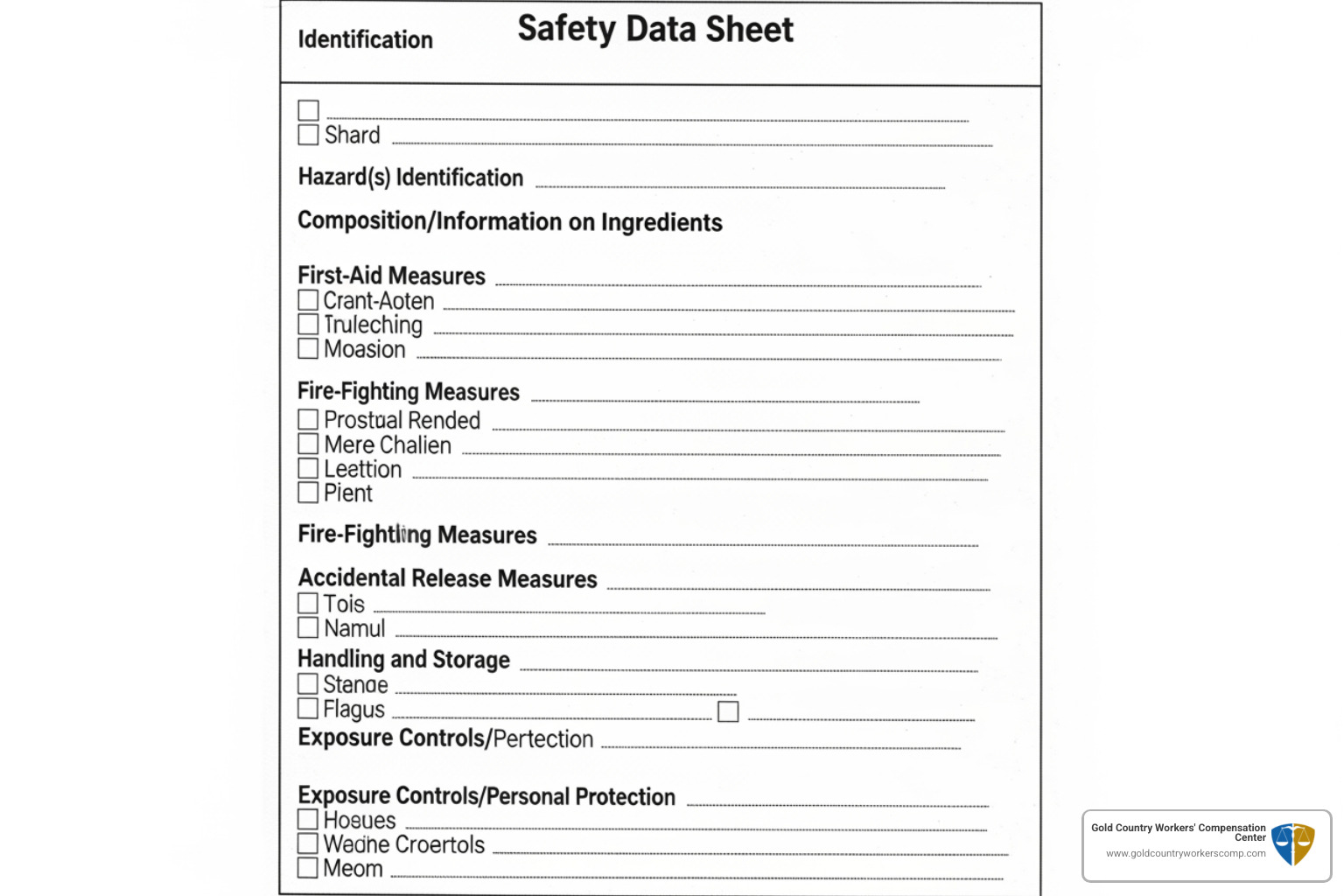
- Make Safety Data Sheets (SDS) accessible: These detailed documents explain a chemical’s properties, health hazards, and safe handling procedures. You have the right to review them at any time.
- Provide comprehensive training: You must be trained on chemical hazards, how to read labels and SDSs, how to use PPE, and what to do if an exposure occurs.
- Monitor exposure levels and maintain records: If monitoring shows concerning exposure levels, your employer must notify you and take corrective action. These records are critical evidence for a future workers’ compensation claim.
When employers fail in these duties and workers get hurt, the workers’ compensation system is there to help you recover.
Navigating a Chemical Exposure Workers Compensation Claim
Chemical exposure workers compensation claims are often more complex than other injury cases. The process can be confusing, especially when insurance companies question whether your illness is work-related. Understanding the steps can make all the difference.
What to Do Immediately After a Chemical Exposure Incident
Acting quickly after a chemical exposure is crucial for your health and your claim. Here are the immediate steps you should take:
- Get medical help immediately, even if you feel fine. Tell the doctor your injury happened at work to create a medical record linking your condition to your job.
- Report the incident to your supervisor as soon as possible. California law gives you 30 days, but reporting sooner strengthens your case.
- Write everything down while it’s fresh in your memory: how, when, and where the exposure occurred; the chemical involved; your symptoms; and any witnesses.
- Identify the specific chemical if you can do so safely. Look for container labels or ask for the Safety Data Sheet (SDS).
- Get contact information from any witnesses. Their statements can provide crucial support for your claim.
Steps to File Your Claim and Secure Benefits
After taking immediate action, you must officially file your claim.
Your employer is required to give you a claim form (DWC-1) within one working day of learning about your injury. Fill it out completely, make a copy for your records, and return it to your employer. This officially starts your chemical exposure workers compensation claim.
Once you submit the form, the claims administrator (usually an insurance company) will process your claim. Continue to follow your doctor’s treatment plan and attend all appointments, as your medical records are the backbone of your case. Keep a log of all communications with the insurance company, noting who you spoke with, when, and what was said.
What Benefits Can You Receive?
If your claim is approved, California law provides several key benefits:
- Medical treatment coverage: Pays 100% of necessary medical care for your work-related exposure, including doctor visits, prescriptions, and specialized treatments.
- Temporary disability benefits: Replaces a portion of your lost wages if your doctor says you cannot work while recovering.
- Permanent disability benefits: Provides compensation if the exposure causes lasting health problems that affect your ability to work.
- Supplemental Job Displacement Benefits (SJDB): A voucher for retraining or skill development if you have permanent work restrictions and cannot return to your old job.
Crucial Documentation for a Chemical Exposure Workers Compensation Claim
Documentation can make or break a claim. The more evidence you have, the harder it is for an insurer to deny it.
- Medical records: Keep all reports, test results, and bills. They are essential for proving the link between your exposure and your illness.
- Incident reports: Get copies of any reports filed with your employer or safety officers.
- Witness statements: Collect written statements or contact information from coworkers who saw what happened.
- Pay stubs: These help calculate your lost wages and disability benefits accurately.
- Personal journal: Track your daily symptoms, medical appointments, and communications with your employer or the insurer. This journal is powerful evidence of how the exposure affects your life.
- Safety Data Sheet (SDS): Obtain the SDS for the chemical involved to support your medical and legal case.

We know this feels like a lot. That’s why Gold Country Workers’ Comp exists—to help workers like you through this process. With nearly 50 years of experience, we can help you avoid costly mistakes and get the benefits you deserve. There’s no initial consultation fee.
Legal Pathways: Workers’ Comp, Third-Party Claims, and Legal Aid
When dealing with a chemical exposure injury, you must understand all your legal options. While chemical exposure workers compensation is your primary path, you may have additional avenues for compensation, especially if a third party is at fault.
California’s no-fault workers’ compensation system means you only need to show the exposure happened at work and caused your illness. This simplifies the process but also limits the damages you can recover. In some situations, a personal injury lawsuit against a third party may also be possible.
Workers’ Compensation Claim vs. a Personal Injury Lawsuit
The difference between these two legal routes is crucial.
-
Workers’ Compensation Claims are part of a no-fault system. You can receive benefits without proving your employer was negligent, which simplifies the process. However, this “exclusive remedy rule” generally prevents you from suing your employer. Benefits cover medical care and lost wages but exclude compensation for pain and suffering.
-
Personal Injury Lawsuits require you to prove that someone’s negligence caused your injury. This is a higher legal bar, but a successful lawsuit can provide more comprehensive damages, including compensation for pain and suffering, emotional distress, and even punitive damages.
There is a rare exception to the exclusive remedy rule: you may be able to sue your employer directly if they intentionally caused your injury.
When a Third Party Is Responsible for Your Exposure
Sometimes, a third party—someone other than your employer or a coworker—shares responsibility for your exposure. In these cases, you can file both a chemical exposure workers compensation claim and a separate personal injury lawsuit against that third party.
Potential third parties include:
- Chemical manufacturers: Can be held liable if their product was defective or lacked proper warnings.
- Defective equipment suppliers: The manufacturer of faulty ventilation systems or protective gear that failed to protect you may be responsible.
- Subcontractors: If a subcontractor on your job site carelessly handled chemicals and exposed you to harm, you can pursue a claim against them.
- Property owners: If you were working on someone else’s property and they failed to warn you of known chemical hazards, they may be liable.
Filing a third-party lawsuit can significantly increase your total recovery by providing damages not covered by workers’ comp, like pain and suffering. However, your employer’s insurer may have a right to be reimbursed from your third-party recovery, so careful legal strategy is essential.
How a Lawyer Can Assist with Your Claim
The complexity of chemical exposure workers compensation claims makes legal representation invaluable. At Gold Country Workers’ Comp, we’ve spent nearly 50 years helping injured workers in Grass Valley, Nevada City, and throughout California steer these challenging cases.
An experienced lawyer can:
- Gather crucial evidence: We collect medical records, incident reports, and expert opinions to build a strong case, which is vital for illnesses that appear years after exposure.
- Steer deadlines: We ensure all paperwork is filed correctly and on time, protecting you from California’s tricky statute of limitations for occupational diseases.
- Negotiate with insurers: We level the playing field against insurance companies whose goal is to minimize your payout, fighting for the full benefits you deserve.
- Represent you in appeals: If your claim is denied, we handle the entire Workers’ Compensation Appeals Board (WCAB) process for you.
- Manage the QME process: We prepare you for Qualified Medical Evaluator (QME) exams and challenge reports that don’t accurately reflect your condition.
Our approach emphasizes early intervention. The sooner we get involved, the better we can protect your rights. We don’t charge for initial consultations, so you can get expert advice without financial risk. Kim LaValley and Kyle Adamson bring decades of combined experience to achieve positive outcomes for injured workers.
You don’t have to face this complex process alone. With the right legal team, you can secure the benefits you need to move forward.


