

A workers’ compensation hearing in California is a formal legal proceeding before a judge at the Workers’ Compensation Appeals Board (WCAB). The judge reviews disputed issues — such as whether your injury is work-related, what medical treatment you need, or how much you’re owed — and issues a ruling. Hearings are less intimidating than courtroom trials, but walking in unprepared can cost you benefits you deserve.
- A WCAB hearing is presided over by a workers’ compensation judge (WCJ), not a jury.
- Most hearings resolve specific disputed issues, not your entire case at once.
- You have the right to bring an attorney — and early legal help dramatically improves outcomes.
- Common mistakes include missing deadlines, arriving without medical evidence, and speaking without counsel.
- If your injury is severe enough to prevent long-term work, you may also have Social Security Disability options alongside your workers’ comp claim.
What Is the WCAB and Why Are Hearings Held There?
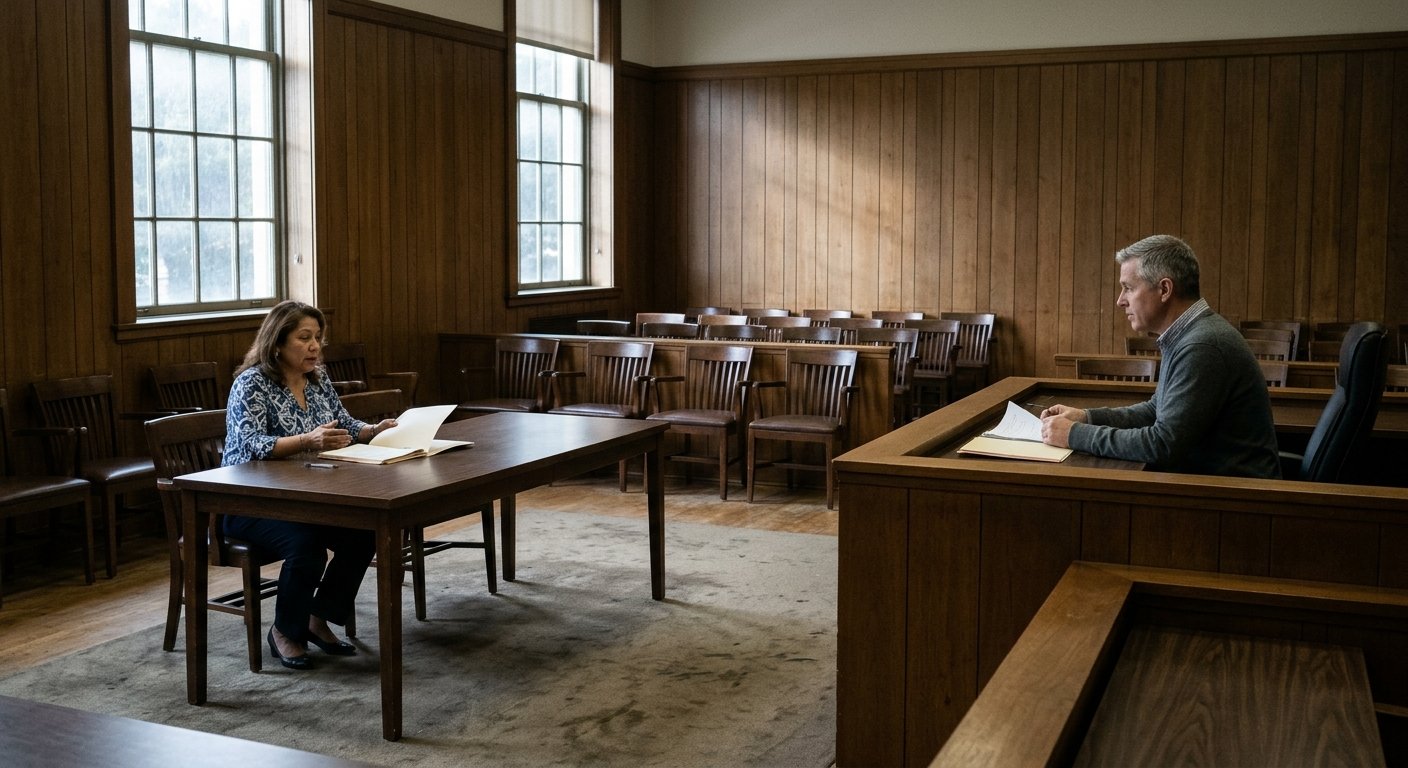
The Workers’ Compensation Appeals Board (WCAB) is California’s court system for resolving disputes in workers’ compensation cases. It operates under the Division of Workers’ Compensation (DWC) and has district offices throughout the state, including locations serving injured workers in Sacramento and surrounding regions.
When an injured worker and an insurance company cannot agree — on the nature of an injury, appropriate medical care, disability rating, or wage benefits — the case gets sent to the WCAB. A workers’ compensation judge, often called a WCJ, reviews the evidence and decides the disputed issues. This judge is an attorney appointed by the state; there is no jury in workers’ comp proceedings.
If you work in construction in Nevada County, transportation in Placer County, or agriculture in Yuba County, the same system applies to you. Understanding how it works before you walk through that door matters enormously.
Workers’ compensation hearings are not criminal proceedings and are far less formal than civil trials — but they are still legal proceedings with rules of evidence, testimony under oath, and binding decisions. Treat them seriously.
Types of WCAB Hearings You Might Face

Not all hearings are the same. Depending on where your case stands, you may be called to one of several types of proceedings.
Mandatory Settlement Conference (MSC)
This is usually the first formal hearing. A judge meets with both sides — you (or your attorney) and the insurance company’s representative — to see if the case can be settled. If it cannot, the judge sets a trial date and identifies the specific legal issues to be decided. Even at this stage, having legal representation is a significant advantage.
Expedited Hearing
If you need urgent relief — for example, if your employer’s insurance company is refusing to authorize emergency medical treatment — you can request an expedited hearing. These are designed to move quickly and address immediate needs rather than the full scope of your claim.
Regular Trial (Contested Case Hearing)
If your case doesn’t settle at the MSC, it proceeds to trial. Both sides present evidence: medical records, deposition transcripts, vocational expert opinions, and witness testimony. The workers’ compensation judge then reviews everything and issues a written decision called a Findings and Award or Order.
Claim Filed
You or your attorney files a DWC-1 form (the official workers’ comp claim form) with your employer after a workplace injury or illness. This triggers the claims process.
Dispute Arises
The insurance company denies your claim, disputes your diagnosis, or disagrees about your level of disability. The case is referred to the WCAB.
Mandatory Settlement Conference
Both sides appear before a workers’ compensation judge. Settlement is attempted. If none is reached, issues are defined and a trial date is set.
Trial (If Needed)
Evidence is submitted and witnesses may testify. The judge reviews the record and issues a binding written decision.
Award or Appeal
The judge issues a Findings and Award. Either party may petition the WCAB panel for reconsideration if they believe an error was made.
What the Judge Actually Decides
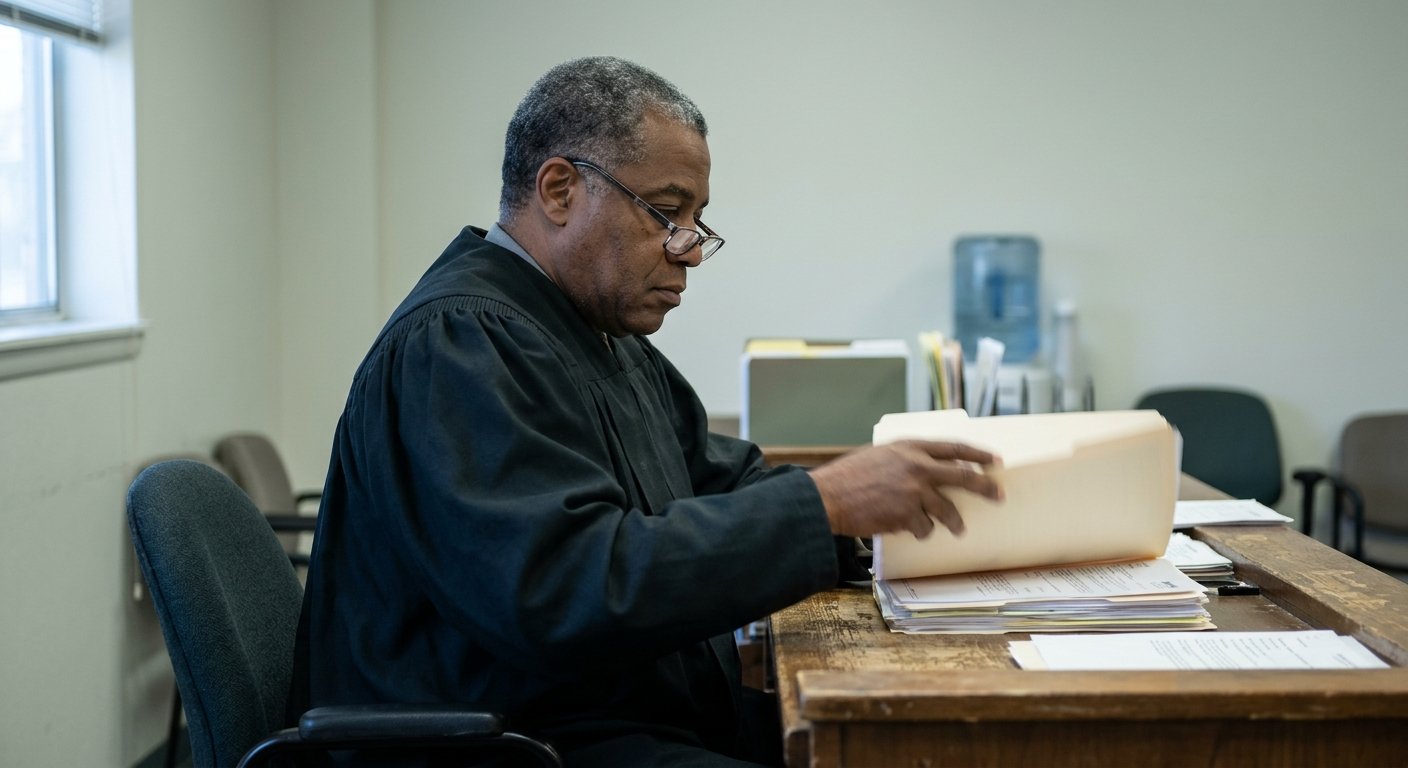
A workers’ compensation judge can decide a wide range of issues. Common disputed questions include:
- Whether your injury actually happened at work (compensability)
- Whether a medical condition is work-related (causation)
- What medical treatment is appropriate and who pays for it
- Your permanent disability (PD) rating — the percentage that determines your long-term compensation
- Whether you are owed unpaid temporary disability (TD) benefits, which replace a portion of lost wages while you recover
- Whether you qualify for vocational rehabilitation or supplemental job displacement benefits
The judge’s decision is based on written evidence submitted before the hearing, not primarily on what you say in the room on that day. This is why building a strong evidentiary record — medical reports, treatment records, and expert opinions — matters so much before you ever set foot in the hearing room.
The judge’s decision is built on paper long before anyone walks into the room — which is exactly why preparation is everything.
How to Prepare for Your Hearing
Preparation is the single biggest factor in how your hearing goes. Here is what matters most.
Organize Your Medical Evidence
Your treating physician’s reports, any Qualified Medical Evaluator (QME) or Agreed Medical Evaluator (AME) findings, and any diagnostic imaging results are the backbone of your case. A QME is a physician certified by the state to evaluate disputed medical issues; an AME is one agreed upon by both parties. Make sure all reports are filed with the WCAB before your hearing date.
Know the Issues Being Decided
Review the pretrial conference statement or any orders from the MSC carefully. The hearing will focus on specific issues — not your general frustration with the process. Know exactly what the judge will be weighing.
Have Legal Representation
Insurance companies send experienced attorneys or representatives to every hearing. Walking in alone puts you at a structural disadvantage from the moment you sit down. Workers’ comp attorneys in California typically work on contingency for the award portion of your case, meaning no upfront fees out of your pocket. At Gold Country Workers’ Comp Center, attorneys Kim LaValley and Kyle Adamson — with almost 50 years of combined legal experience — offer a free consultation so you can understand your position before committing to anything.
Many workers assume the hearing is a chance to “tell their story” and that the judge will simply believe them. In practice, the judge weighs documented medical and legal evidence. Compelling testimony helps, but it rarely overcomes gaps in the medical record.
Mistakes Workers Make at WCAB Hearings
Even well-intentioned workers make errors that damage their claims. The most common include:
- Arriving without documentation. Verbal descriptions of pain or lost wages carry less weight than written records.
- Missing filing deadlines. California workers’ comp has strict timelines. The DWC requires specific forms to be filed on schedule or rights can be waived.
- Settling too early. Insurance companies sometimes offer settlements before your condition reaches maximum medical improvement (MMI), meaning the full extent of your disability isn’t yet known. Settling too soon can leave long-term needs uncompensated.
- Not disclosing prior injuries honestly. Failing to disclose a prior injury — even a minor one — can destroy your credibility with the judge.
- Going without an attorney. This is the most consequential mistake. The hearing process has procedural rules that take time to learn, and insurance companies depend on unrepresented workers making errors.
What Happens After the Hearing
After a trial, the workers’ compensation judge reviews all submitted evidence and issues a written Findings and Award. This can take weeks to months depending on the complexity of the case. If you believe the judge made a legal error, you or your attorney can file a Petition for Reconsideration with the WCAB panel within 20 days of the decision, per California Labor Code procedures.
If your injury is severe enough that returning to any work is in question, it’s also worth exploring whether you qualify for Social Security Disability Insurance (SSDI). The two systems can interact in important ways — learn more about how workers’ comp and Social Security disability differ and overlap.
Frequently Asked Questions
Do I have to testify at a workers’ comp hearing?
Not always. At a Mandatory Settlement Conference, testimony is rarely needed. At a trial, you may testify, but the judge’s decision is primarily based on written medical and legal evidence submitted beforehand. Your attorney will advise you on whether testifying helps your case.
Can I bring a family member or friend to my WCAB hearing?
You can bring support, but only your legal representative can speak on your behalf. WCAB hearings are formal proceedings; observers are generally permitted but cannot participate. Your attorney is the right person in your corner when it comes to advocacy.
What if I disagree with the judge’s decision?
You can file a Petition for Reconsideration with the WCAB panel within 20 days of the decision. If that is denied, further appeals are possible through the California Court of Appeal. These steps are complex and are best handled with legal representation.
How long does a workers’ comp hearing take?
A Mandatory Settlement Conference may last an hour or less. A contested trial can take a full day or be spread across multiple sessions, depending on how many witnesses and how much evidence is involved. After trial, the written decision can take weeks to months.
Is it too late to get an attorney if my hearing is already scheduled?
It is almost never too late, though earlier is always better. An attorney can review your case, identify issues, and prepare your evidence even on a compressed timeline. Contact Gold Country Workers’ Comp Center at 530-362-7188 for a free consultation as soon as possible.
Facing a WCAB Hearing? Don’t Go in Alone.
A free consultation with our team costs you nothing and can make a significant difference in how your hearing goes — contact us today to talk through your situation.

About Gold Country Workers' Comp Center
Gold Country Workers' Comp Center is a Grass Valley law firm, founded by attorney Kim LaValley, that represents injured workers in workers' compensation claims and Social Security disability cases across Northern California's Gold Country. Between Kim LaValley and Kyle Adamson, the firm offers almost 50 years of legal experience, most of it in workers' compensation and disability law. Articles explain the claims process in plain English and invite readers to a free consultation. Visit goldcountryworkerscomp.com →


