Workers’ Comp Woes? Locate Your Local Legal Lifeline

workers comp lawyer near me

When Workplace Injuries Strike: Finding Your Path to Recovery

Getting hurt on the job is stressful, and navigating the claims process alone can be overwhelming. If you’re searching for a workers comp lawyer near me, you need immediate access to legal help to protect your rights.

To find a qualified workers’ compensation attorney in your area:

  1. Search online directories for California-certified specialists.
  2. Ask for referrals from coworkers, union reps, or medical providers.
  3. Schedule free consultations to compare attorneys.
  4. Verify credentials through the State Bar of California.
  5. Choose a lawyer who works on contingency and has relevant case experience.

California’s workers’ compensation system is supposed to provide medical care and financial support, but insurance companies often prioritize minimizing payouts. With over 163,000 claims in Los Angeles County alone in 2022, thousands of workers face this challenge annually. You have 30 days to report your injury and one year to file a formal claim.

A local workers’ comp lawyer acts as your advocate, countering insurance company tactics and navigating complex state laws. They work on a contingency basis, so you don’t pay unless you win. Whether facing a denied claim or a low settlement offer, early legal guidance is key to securing the benefits you deserve.

Infographic showing 5 immediate steps after a workplace injury: 1) Report the injury to your supervisor within 30 days, 2) Seek immediate medical attention even if injury seems minor, 3) Document the accident scene with photos and witness information, 4) Request a DWC-1 claim form from your employer, 5) Contact a workers' compensation lawyer for a free consultation to protect your rights - workers comp lawyer near me infographic

Understanding Your Rights and the California Workers’ Comp System

If you’re hurt at work in California, the law is set up to protect you. Every employer must carry workers’ compensation insurance, which acts as a safety net for employees who get injured or ill because of their job.

California’s system is “no-fault,” meaning you are generally covered if your injury happened while performing your job, regardless of who was to blame. This removes the stress of proving employer negligence to get benefits.

As an injured worker, you have several key rights:

  • Medical Treatment: You are entitled to all necessary medical care, including doctor visits, hospital stays, prescriptions, and physical therapy.
  • Disability Benefits: If you can’t work, you may receive temporary disability payments to replace a portion of your lost wages. For lasting impairments, you may be eligible for permanent disability benefits.
  • Job Protection: California Labor Code section 132a makes it illegal for your employer to fire or retaliate against you for filing a workers’ comp claim.
  • Vocational Rehabilitation: If you can’t return to your old job, you may qualify for a Supplemental Job Displacement Benefit to help with retraining.

Workers’ Compensation vs. Personal Injury Claims

It’s important to understand the difference between workers’ compensation and personal injury claims. Workers’ comp is a no-fault insurance system that covers your medical bills and a portion of lost wages but typically excludes pain and suffering. A personal injury claim, however, requires proving that a third party’s negligence caused your injury. While harder to prove, a PI claim allows you to seek broader damages, including pain and suffering.

Sometimes, an injury can lead to both types of claims. For example, a delivery driver hit by a negligent motorist can file a workers’ comp claim with their employer and a personal injury claim against the at-fault driver. An experienced workers comp lawyer near me can help steer this complex situation.

Feature Workers’ Compensation (WC) Claim Personal Injury (PI) Claim
Basis No-fault system Fault-based (negligence of a third party)
Who you sue Employer’s insurance (cannot sue employer directly) Negligent third party (e.g., driver, manufacturer)
Benefits Medical care, lost wages (2/3), permanent disability Medical care, lost wages (full), pain & suffering, emotional distress
Purpose Cover work-related injuries/illnesses Compensate for injuries due to another’s negligence
Complexity Administrative process, regulated by state Litigation, court rules, often involves negotiation
Statute of Limitations Generally 1 year from injury findy (CA) Generally 2 years from injury date (CA)

What Types of Injuries and Illnesses Are Covered?

California’s workers’ comp system covers a broad range of health issues caused or aggravated by your job duties, not just sudden accidents.

Common covered injuries and illnesses include:

  • Sudden Accidents: Slips and falls, car accidents on the job, construction site incidents, or being struck by an object.
  • Repetitive Motion Injuries (RMIs): Conditions like carpal tunnel syndrome, tendinitis, and back strains from repetitive tasks.
  • Toxic Exposure: Illnesses from exposure to chemicals, fumes, or other hazardous materials, which can lead to long-term conditions like occupational cancers.
  • Work-Related Stress: Mental health conditions arising from significant job stress or a hostile work environment.
  • Aggravated Pre-Existing Conditions: If work duties worsen an existing injury or medical condition, it is still coverable.
  • Specific and Occupational Diseases: This includes everything from hearing loss and chronic lung conditions to neck and spine injuries, traumatic brain injuries (TBI), burns, fractures, and amputations.

If your job caused your injury or illness, it is likely covered. However, even small paperwork errors can lead to a denial, making it crucial to document everything correctly from the start.

The California Claim Process: A Step-by-Step Guide

Navigating the California workers’ compensation process can feel daunting, but understanding the steps can make it manageable. With the right support from a workers comp lawyer near me, you can confidently move forward.

Calendar highlighting key workers' compensation deadlines - workers comp lawyer near me

Here’s a brief walkthrough of the claim process:

  1. Report Your Injury: You must inform your employer within 30 days. Failing to do so can jeopardize your claim.
  2. Seek Medical Attention: Get medical care immediately, even for minor injuries. Medical records are crucial evidence.
  3. Document Everything: If possible, take photos of your injuries and the accident scene, and collect contact information from any witnesses.
  4. File the DWC-1 Form: Your employer must provide a DWC-1 claim form within one working day of being notified. Fill it out and return it to them promptly. They will forward it to their insurance carrier.

Workplace injuries can happen anywhere, from high-risk construction sites and factories to seemingly safe office environments where slips, falls, and repetitive stress injuries are common.

Critical Deadlines You Cannot Miss

Timing is everything in a workers’ comp case. Missing a deadline can result in a complete loss of benefits.

  • 30-Day Reporting Window: You must notify your employer of your injury within 30 days.
  • One-Year Statute of Limitations: You must file an “Application for Adjudication of Claim” with the Workers’ Compensation Appeals Board (WCAB) within one year from the date of injury.

Meeting these deadlines is non-negotiable, and a lawyer can ensure all paperwork is filed correctly and on time.

What to Expect After You File Your Claim

After you file, one of several things will happen. The best-case scenario is claim acceptance, where the insurance company agrees your injury is work-related and begins paying benefits. However, claims are often denied or delayed while the insurer investigates.

A claims administrator will be assigned to your case. Their loyalty is to the insurance company. During a delay, the insurer is typically required to authorize up to $10,000 in medical treatment.

If your doctor confirms you cannot work, you may begin receiving temporary disability (TD) payments. These benefits typically cover about two-thirds of your average weekly wage, up to a state-mandated maximum. Because insurance companies often try to reduce or deny claims, having an experienced workers comp lawyer near me from the start is vital to protect your interests.

Why You Need a Workers Comp Lawyer Near Me

When you’re recovering from an injury, the last thing you need is a fight with an insurance company. However, insurers are businesses focused on minimizing payouts. They use trained adjusters to deny claims, delay treatment, and push lowball settlement offers. The California workers’ compensation system is complex, with strict deadlines and procedures where a single mistake can cost you your benefits.

A workers comp lawyer near me levels the playing field. We know the insurance companies’ playbook and counter their tactics to protect your rights. We handle the legal complexities so you can focus on healing, working to maximize your benefits and ensure you receive fair compensation for your medical expenses, lost wages, and any permanent disability.

When to Hire an Attorney for Your Work Injury

While not every case requires a lawyer, certain situations make legal representation essential. Consider hiring a workers comp lawyer near me if:

  • Your claim is denied.
  • You suffer a permanent impairment and disagree with the disability rating.
  • Your employer retaliates against you for filing a claim (e.g., fires or demotes you).
  • A third party (like a negligent driver or equipment manufacturer) is involved.
  • You need to steer the Qualified Medical Evaluator (QME) process.
  • You are also applying for Social Security Disability (SSDI) benefits.
  • You receive a low settlement offer.
  • Your medical treatment is delayed or denied.

Gold Country Workers’ Compensation Center specializes in early intervention and offers a free consultation to assess your case. Getting help early often leads to better outcomes. More info about our services

How to Find the Right Workers Comp Lawyer Near Me

Choosing the right legal advocate is crucial for your recovery. Here’s what to look for:

  • Local Expertise: An attorney in areas like Grass Valley, Roseville, or Nevada City understands the local courts, doctors, and claims administrators.
  • Certified Specialists: Look for lawyers certified as specialists in workers’ compensation law by the State Bar of California, which indicates a higher level of expertise.
  • Client Testimonials: Reviews reveal an attorney’s communication style, dedication, and success rate.
  • Free Consultations: Reputable lawyers offer free initial consultations to discuss your case without financial commitment.
  • Contingency Fee: Most work on a contingency basis, meaning you pay no upfront costs. Fees, typically 10-15%, are taken from the settlement only if you win.
  • Case Experience: Ask about their track record with injuries like yours. Our firm has nearly 50 years of combined experience handling thousands of cases.
  • Personalized Attention: You need a lawyer who listens and provides compassionate support. At Gold Country Workers’ Compensation Center, Kim LaValley and Kyle Adamson founded our firm on the principle of providing both excellent legal representation and genuine human compassion.

Maximizing Your Claim and Overcoming Challenges

Filing a claim is just the beginning. Securing fair compensation requires a strategic approach to maximize every benefit you are legally entitled to.

Lawyer advocating for a client in a professional setting - workers comp lawyer near me

One of the most critical elements is your permanent disability rating, a percentage that measures your impairment and directly determines the value of your settlement. Insurance companies often push for low ratings to save money. We fight to ensure your rating accurately reflects your condition, often using independent medical evaluations to counter biased assessments.

When settling, you may choose between a lump-sum settlement or structured settlements paid over time. We help you weigh the pros and cons to make the best decision for your future. Our legal strategy is built on meticulous evidence gathering, including comprehensive medical reports, vocational assessments, and witness statements to build a strong case.

How a Lawyer Maximizes Your Settlement

An experienced workers comp lawyer near me does more than just file paperwork; we actively work to increase your compensation. We do this by:

  • Ensuring an Accurate Disability Rating: We challenge low ratings from insurance company doctors and secure independent evaluations.
  • Calculating Future Medical Costs: Your settlement must account for all future medical needs, including therapy, medication, and potential surgeries.
  • Negotiating with Adjusters: We know their tactics and counter lowball offers to secure a settlement that reflects your true losses.
  • Appealing Denied Benefits: We handle the appeals process to overturn unfair denials of medical treatment or disability payments.
  • Pursuing Third-Party Claims: If another party’s negligence caused your injury, we can file a separate personal injury claim to recover damages for pain and suffering and full lost wages.

Problems frequently arise in workers’ comp cases. We are prepared to handle them.

  • Challenging Low Disability Ratings: We use Qualified Medical Evaluator (QME) reports from independent doctors to fight for a fair rating.
  • Fighting Premature Return-to-Work Orders: We advocate for your right to recover fully before returning to work to prevent re-injury.
  • Dealing with Biased IMEs: We prepare you for Independent Medical Examinations (IMEs) and challenge unfavorable reports with evidence from your treating physicians.
  • Countering Delay Tactics: We aggressively pursue responses from insurance companies to keep your case moving and ensure you receive timely benefits.
  • Addressing Employer Retaliation: If you are fired or demoted for filing a claim, we can take legal action for wrongful termination.

With thousands of claims filed annually in California, these challenges are common. You can explore workplace injury statistics here: California workplace injury data. You don’t have to face these issues alone.

Frequently Asked Questions about California Workers’ Comp

Navigating a workplace injury claim brings up many questions. Here are clear, straightforward answers to some of the most common concerns we hear from injured workers.

Can my employer fire me for filing a workers’ compensation claim?

No. It is illegal for an employer to fire, demote, or otherwise retaliate against you for filing a workers’ compensation claim. This protection is guaranteed under California Labor Code section 132a. If you believe you’ve been wrongfully terminated or treated unfairly, a workers comp lawyer near me can help you pursue legal action.

Do I get my full pay while on workers’ comp?

No, not typically. If your injury prevents you from working, you are eligible for temporary disability benefits, which generally cover two-thirds of your average weekly wage. These payments are subject to state-mandated maximums, so they do not fully replace your income. This is important for managing your financial expectations during recovery.

How much do workers’ compensation lawyers charge in California?

Most workers’ comp lawyers in California, including our firm, work on a contingency fee basis. This means you pay no upfront costs, and we only collect a fee if we win your case. The fee is a percentage of your final award, typically 10% to 15%, and is regulated by the Workers’ Compensation Appeals Board (WCAB) to ensure fairness. This “no win, no fee” structure allows you to get expert legal help without financial risk.

Your Local Lifeline for a Successful Claim

Getting hurt at work can turn your world upside down, leaving you to face pain, medical bills, and a complex legal system. The California workers’ compensation process is supposed to help, but it often feels like an obstacle course, with insurance companies focused on minimizing their payouts.

You don’t have to steer this alone. An experienced local attorney is your advocate and shield, handling the complex paperwork and fighting for the benefits you deserve. This allows you to focus on what matters most: your recovery.

At Gold Country Workers’ Compensation Center, we have nearly 50 years of combined experience helping injured workers in Grass Valley, Roseville, Nevada City, and the surrounding region. We believe in early intervention, offering a free consultation to address issues before they become major problems. This approach leads to better, more cost-effective outcomes.

Kim LaValley and Kyle Adamson founded our firm to help people resolve their workers’ comp issues with positive results. We understand the worries that come with a workplace injury and are here to provide expert guidance and compassionate support.

If you’re searching for a dedicated workers comp lawyer near me in California, let us be your local legal lifeline. Together, we can secure your benefits and get you on the road to recovery.

Get a free consultation with a California workers’ compensation lawyer

The Clock’s Ticking: When Workers’ Comp Steps In for Missed Work

will workers comp pay for missed days

When Workers’ Comp Steps In: Understanding Payment for Missed Work

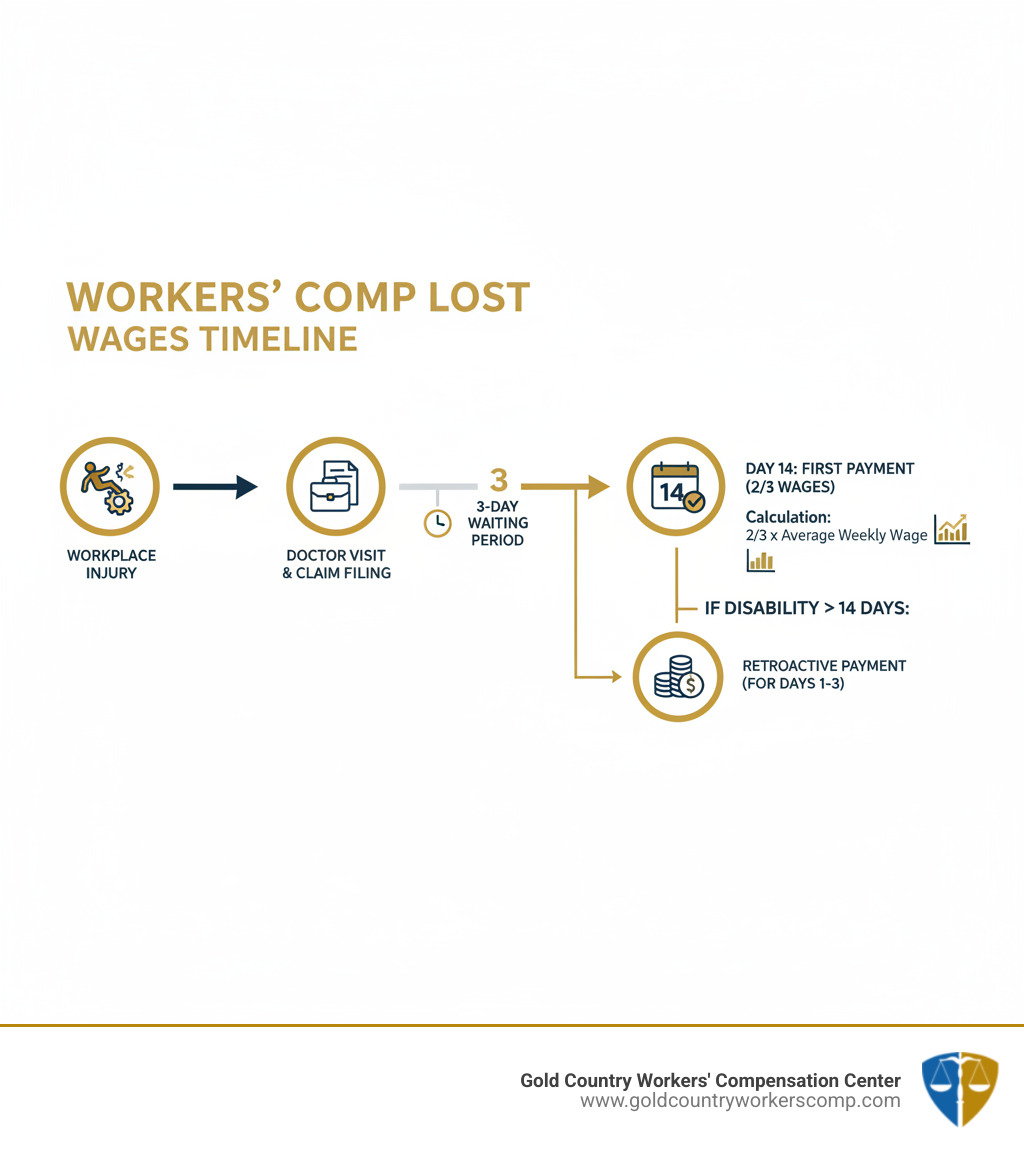
Will workers comp pay for missed days is one of the first questions injured workers ask. The short answer is yes—but only if your doctor says you can’t work and after a required waiting period.

Here’s what you need to know:

  • Workers’ compensation pays for missed days if a doctor certifies you are unable to work due to your injury.
  • In California, you must miss 3 days of work before benefits begin (other states have similar 3-7 day waiting periods).
  • If you are unable to work for 14 days or more, benefits become retroactive, meaning you get paid for the first 3 days.
  • You will receive two-thirds of your average weekly wages, not your full paycheck.
  • The first check typically arrives within 14 days after your employer is aware of your injury and disability.

When you’re injured, navigating lost wage benefits—also called indemnity or disability benefits—can be overwhelming. The workers’ compensation system is designed to replace a portion of your wages while you recover, but there are rules about when payments start, how much you’ll receive, and how long they last.

This guide breaks down exactly when workers’ comp will pay for your missed days, how much you can expect, and the steps you need to take to secure your benefits.

infographic showing timeline from workplace injury through doctor visit, claim filing, 3-day waiting period, first payment at 14 days, and retroactive payment if disability exceeds 14 days, with two-thirds wage replacement calculation - will workers comp pay for missed days infographic

Understanding Your Right to Lost Wage Benefits

When a workplace injury keeps you from earning a paycheck, workers’ compensation is there to help. In California, every employer must carry workers’ compensation insurance. It’s a no-fault system, meaning if you’re hurt on the job, you are entitled to benefits, regardless of who was at fault.

Workers’ comp provides two main types of support: coverage for all necessary medical care and lost wage benefits (also called temporary disability) when your injury prevents you from working. These benefits are a financial lifeline, but receiving them depends on your doctor’s assessment that you cannot perform your job duties.

The process begins when you report your injury to your employer, which you must do within 30 days. Your employer then has 24 hours to provide a DWC-1 claim form. Filing this form is the official first step to receiving compensation for missed days.

Under what circumstances will workers comp pay for missed days?

Payment for missed days hinges on your doctor’s medical determination. You are eligible for benefits in two main scenarios:

  • Total Disability: Your doctor determines you cannot work at all. This is called Temporary Total Disability (TTD). For example, a construction worker with a severe back injury who is told to stay home and recover would receive TTD benefits.

  • Partial Disability with Lost Wages: Your doctor clears you to return to work with restrictions (e.g., reduced hours, no heavy lifting). If these restrictions cause you to earn less than your pre-injury wages, you qualify for Temporary Partial Disability (TPD) benefits to supplement your income.

In both cases, your doctor’s authorization is essential. Without medical documentation supporting your time off or work restrictions, the insurance company will not pay.

What is the role of a doctor’s assessment?

Your doctor’s role is critical in determining if workers comp will pay for missed days. The primary treating physician creates the official record that supports your claim for financial benefits.

After your injury, your doctor will provide medical reports that detail:

  • Your Disability Status: Whether you are temporarily totally disabled, partially disabled, or have reached Maximum Medical Improvement (MMI)—the point at which your condition has stabilized.
  • Work Restrictions: Specific limitations on your activities, such as lifting weight limits or restrictions on standing. These determine what kind of work you can safely perform.
  • Return-to-Work Authorization: The doctor decides when and if you can return to your job, either in a full or modified capacity.

If the insurance company disputes your doctor’s findings, they may require you to see an Independent Medical Examiner (IME) for a second opinion. Clear and consistent documentation from your treating physician is your strongest tool for proving your need for time off and securing your benefits.

Will Workers Comp Pay for Missed Days? The Waiting Period Explained

Understanding the waiting period is crucial when asking, “will workers comp pay for missed days?” While the system is designed for timely support, there’s a short initial period where wage replacement benefits don’t apply.

How long is the waiting period before benefits are paid?

In California, there is a three-day waiting period before lost wage benefits begin. This means you will not be paid for the first three calendar days you are unable to work due to your injury. The clock starts on the first full day you miss work.

This waiting period is a standard feature in most states, though the duration varies. Once your claim is accepted, the first payment for eligible days should arrive within 14 days of your employer being notified of your injury and disability.

What if my disability lasts longer than 14 days?

If your inability to work extends beyond 14 calendar days, the waiting period becomes retroactive. This means you will be paid for the initial three days that were unpaid.

For example, if you are out of work for 10 days, you will be paid for 7 of them. However, if you are out for 15 days, you will be paid for all 15. This rule ensures that workers with more significant injuries receive more comprehensive compensation for their lost time from day one.

How Your Lost Wage Payments Are Calculated

Once you know workers comp will pay for missed days, the next question is, “How much will I receive?” Workers’ comp is designed to replace a portion of your income, not your full paycheck.

calculator with pay stubs - will workers comp pay for missed days

How is the amount of lost wage benefits determined?

In California, lost wage benefits are calculated as two-thirds of your Average Weekly Wage (AWW), which is based on your gross earnings (before taxes) in the 52 weeks prior to your injury. Your AWW includes all forms of income, such as regular wages, overtime, and earnings from other jobs (concurrent employment).

While two-thirds may seem low, these benefits are tax-free, so the amount you receive is often close to your usual take-home pay.

California also sets annual limits. For injuries occurring in 2025, the maximum Temporary Disability rate is $1,686.74 per week. Even if two-thirds of your AWW is higher, your benefit will be capped at this amount. There is also a minimum benefit to support lower-wage workers. These rates are adjusted annually, so check the current figures.

What is the difference between temporary total and temporary partial disability?

Lost wage benefits fall into two categories based on your ability to work:

  • Temporary Total Disability (TTD): You receive TTD benefits when your doctor determines you are completely unable to work. Payments are two-thirds of your AWW (up to the state maximum) and continue until you can return to work or reach Maximum Medical Improvement.

  • Temporary Partial Disability (TPD): TPD benefits apply when you can return to work but with limitations that result in reduced earnings (e.g., fewer hours or a lower-paying modified role). TPD pays two-thirds of the difference between your pre-injury and current earnings. For example, if you lost $400 in weekly wages, your TPD benefit would be approximately $267 per week.

TPD is designed to support your transition back to the workforce without financially penalizing you for working within your doctor’s restrictions.

The workers’ compensation process isn’t always simple. Certain situations can affect whether workers comp will pay for missed days, and knowing how to handle them is key.

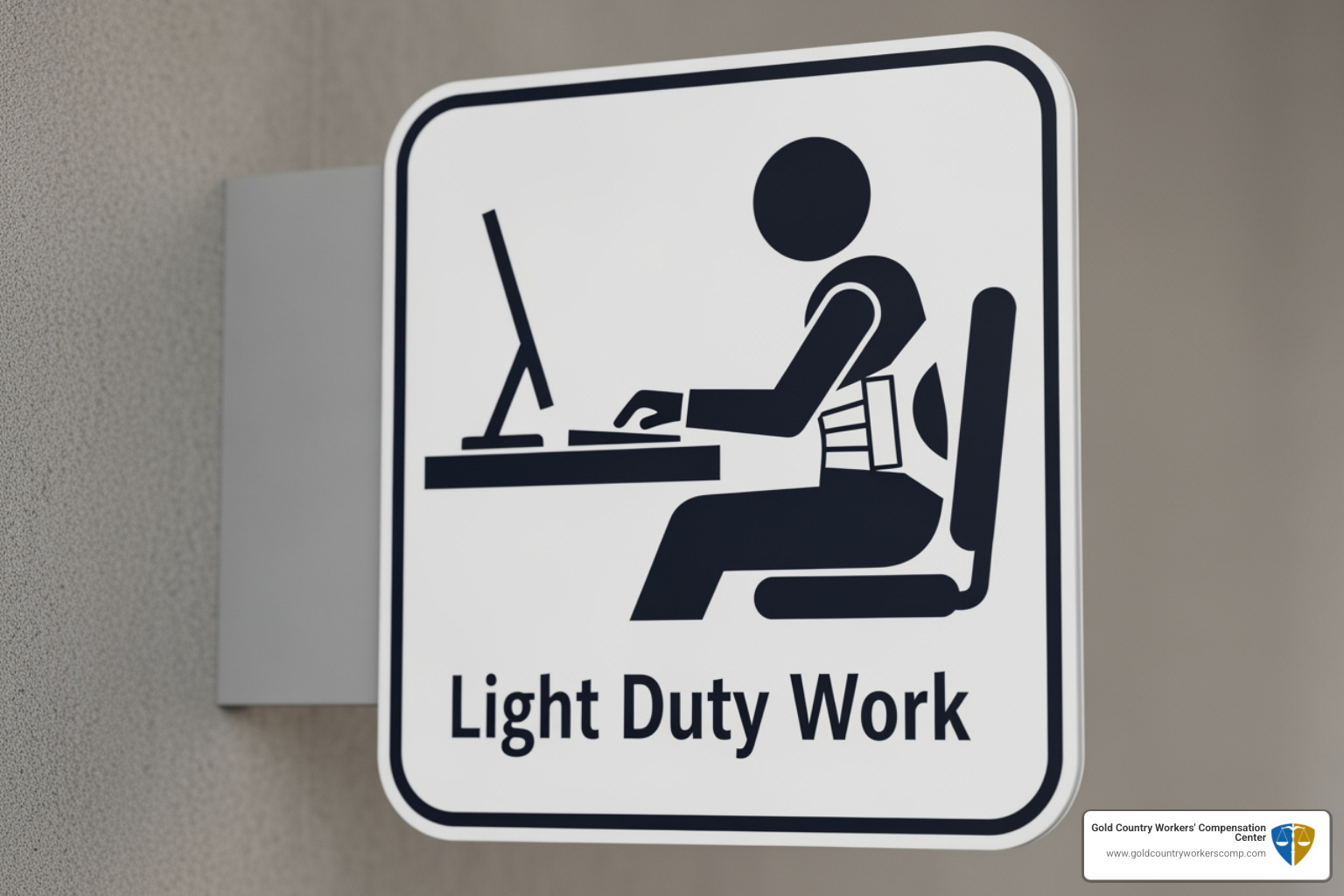
Light duty work sign - will workers comp pay for missed days

Can I receive benefits if I am offered light-duty work?

Yes. If your doctor releases you to modified or “light-duty” work and your employer offers a position that accommodates your restrictions, you may still be eligible for benefits. If the new role pays less than your pre-injury job (due to fewer hours or lower pay), you can receive Temporary Partial Disability (TPD) benefits. These payments cover two-thirds of the wage difference.

The crucial element is that the job offer must align with your doctor’s approved restrictions. Clear communication between you, your doctor, and your employer is essential.

What are the implications of refusing a modified job offer?

Refusing a suitable modified job offer can have serious consequences. If your employer offers a position that fits within your doctor’s restrictions and you decline it without a valid reason, your lost wage benefits will likely be terminated. The insurance company may argue you are voluntarily choosing not to earn available income.

However, there can be valid reasons to refuse, such as if the job does not truly meet your medical restrictions or is otherwise unsuitable. If you are unsure about a light-duty offer, it is critical to seek legal advice to protect your benefits.

Are there situations where will workers comp pay for missed days is not an option?

Yes, there are circumstances where you may not be eligible for lost wage benefits. These include:

  • Injury is Not Work-Related: The injury must arise out of and in the course of your employment.
  • Waiting Period Not Met: If you are disabled for three days or less, you will not receive wage benefits for that time.
  • Refusing a Suitable Job Offer: As discussed above, turning down appropriate modified work can end your benefits.
  • Claim Denial: If the insurer denies your claim, benefits will not be paid unless you successfully appeal the decision. Denials can happen for many reasons, including late reporting or disputes over the cause of the injury.
  • Fraud: Intentionally misrepresenting your injury or ability to work will result in a denial and potential legal penalties.
  • Pre-existing Conditions: Workers’ comp does not cover pre-existing conditions unless your work duties significantly aggravated or worsened the condition. Proving this requires strong medical evidence.

The Long-Term Outlook: From Temporary to Permanent Benefits

When you’re first injured, your focus is on immediate recovery. But for some, injuries have lasting effects, and the workers’ compensation system shifts from temporary support to addressing permanent impairments.

How long can I receive temporary lost wage benefits?

In California, you can generally receive Temporary Disability benefits for up to 104 weeks (two years) within a five-year period from your injury date. For certain severe injuries, such as severe burns or chronic lung disease, this limit extends to 240 weeks.

Temporary benefits end when your doctor clears you to return to your usual job or you reach Maximum Medical Improvement (MMI). MMI means your condition has stabilized and is not expected to improve further with treatment, even if you still have limitations.

What are permanent disability benefits?

If your injury results in a permanent impairment after you reach MMI, you may qualify for Permanent Disability (PD) benefits. Unlike temporary benefits that replace wages, PD benefits compensate you for the permanent loss of function and its impact on your future earning capacity.

Your level of impairment is assigned a percentage rating by a doctor, which determines the value of your PD benefits. Unfortunately, the maximum weekly PD payment rate has been capped at $290 per week since 2014 and has not been adjusted for inflation. These benefits can be paid in weekly installments or as a lump-sum settlement, which may close out your rights to future medical care.

In rare cases of catastrophic injury resulting in permanent total disability, you may be entitled to lifetime benefits. For more details, the California Department of Industrial Relations offers information on Permanent Disability (PD) benefits.

How do workers’ comp benefits differ from Social Security?

It’s common to confuse workers’ compensation with Social Security Disability, but they are separate programs:

  • Workers’ Compensation: A state-mandated insurance program paid by your employer. It covers medical care and lost wages specifically for work-related injuries and illnesses. Benefits can begin after a short waiting period.

  • Social Security Disability (SSD): A federal program funded by your payroll taxes. It provides income to individuals with a severe, long-term disability (expected to last at least 12 months or result in death) that prevents them from performing any substantial work, regardless of whether the disability is work-related. The application process is often lengthy.

You may be eligible for both programs, but receiving workers’ comp can reduce your Social Security benefit amount. Navigating these systems can be complex, and legal guidance is often necessary to secure all the benefits you are entitled to. You can learn more from the Social Security Administration.

Frequently Asked Questions about Lost Wages

Many injured workers share the same questions and concerns about lost wages. Here are answers to some of the most common ones we hear.

What happens if my employer continues to pay my wages while I’m out?

If your employer pays your full salary while you recover—through sick leave, vacation time, or a salary continuation plan—you will not receive separate lost wage benefits from the workers’ comp insurer for that same period. You cannot be paid twice for the same time off. However, your employer can often seek reimbursement from the insurer for the wages they paid you. It’s important to keep clear records to avoid any overpayment issues.

What happens if my workers’ compensation claim for lost wages is denied?

A denial is not the final word. The insurer must provide a written explanation for the denial, which could be due to a dispute over whether the injury is work-related, a lack of medical evidence, or a procedural error. The insurer has up to 90 days to investigate and potentially deny a claim.

You must act quickly to appeal a denial. In California, this involves filing an Application for Adjudication of Claim. This is a critical moment where an experienced attorney can make a significant difference. At Gold Country Workers’ Compensation Center, we review denial letters, gather necessary evidence, and represent our clients before a judge to fight for the benefits they deserve. Our early intervention approach, with no initial consultation fee, is designed to build the strongest possible case from the start.

What benefits are available for dependents if a worker dies?

When a worker dies from a work-related injury, California’s workers’ compensation system provides death benefits to support their dependents. These benefits include:

  • Burial Expenses: A payment up to a statutory maximum to cover funeral costs.
  • Weekly Payments: Eligible dependents (typically a surviving spouse and minor children) receive weekly payments, usually calculated as two-thirds of the deceased worker’s average weekly wage.

The duration of these payments depends on the dependent. Children generally receive benefits until age 18. A surviving spouse may receive benefits for life or until they remarry, at which point they typically receive a final lump-sum payment. Calculating these benefits is complex, and compassionate legal guidance can ensure a family receives the full support they are entitled to during a difficult time.

Conclusion

You now have a clearer understanding of when and how workers comp will pay for missed days in California. While the system can feel complex, knowing your rights is the first step toward securing the financial support you need.

The key takeaways are that your doctor’s medical opinion is paramount, a short waiting period applies but is paid retroactively for longer disabilities, and benefits are calculated as two-thirds of your average weekly wage, tax-free. Whether you are completely out of work or on light duty with reduced pay, the system is designed to bridge the financial gap.

If your claim is denied or you face roadblocks, you have the right to appeal. The journey from a temporary injury to a permanent one involves different types of benefits, and navigating each stage requires knowledge and persistence.

At Gold Country Workers’ Compensation Center, our team, led by Kim LaValley and Kyle Adamson, has nearly 50 years of combined experience helping injured workers in Grass Valley, Nevada City, Roseville, and the greater Sacramento area. We are committed to early intervention and personalized attention.

If you are struggling with your claim or simply want to ensure you’re receiving all your benefits, we are here to help. We don’t charge for initial consultations because you deserve to understand your options without financial risk. Don’t let confusion or intimidation prevent you from getting the benefits you’ve earned. Reach out to us for a free consultation to understand your full range of workers’ comp benefits. Your focus should be on healing—let us handle the legal complexities.

Beyond the Claim: Navigating Lawsuits and Harassment on Workers’ Comp

suing your employer for workers comp

Understanding Your Rights When Injured at Work

Suing your employer for workers comp is generally not allowed in California due to the “exclusive remedy rule.” This rule limits most injured workers to the workers’ compensation system, which provides benefits regardless of fault. However, you can file a civil lawsuit against your employer in specific, narrow situations:

  • Your employer intentionally injured you or committed assault.
  • Your employer fraudulently concealed a workplace hazard that caused your injury.
  • Your employer manufactured a defective product that injured you (dual capacity doctrine).
  • Your employer doesn’t carry workers’ compensation insurance as required by law.
  • A third party (not your employer or coworker) caused your injury.

When you’re hurt on the job, it’s easy to feel overwhelmed by medical bills, lost wages, and a complex legal system. The workers’ comp system is designed to help, but it’s often a maze of forms and deadlines. Crucially, it does not allow you to sue for pain and suffering or recover your full lost wages.

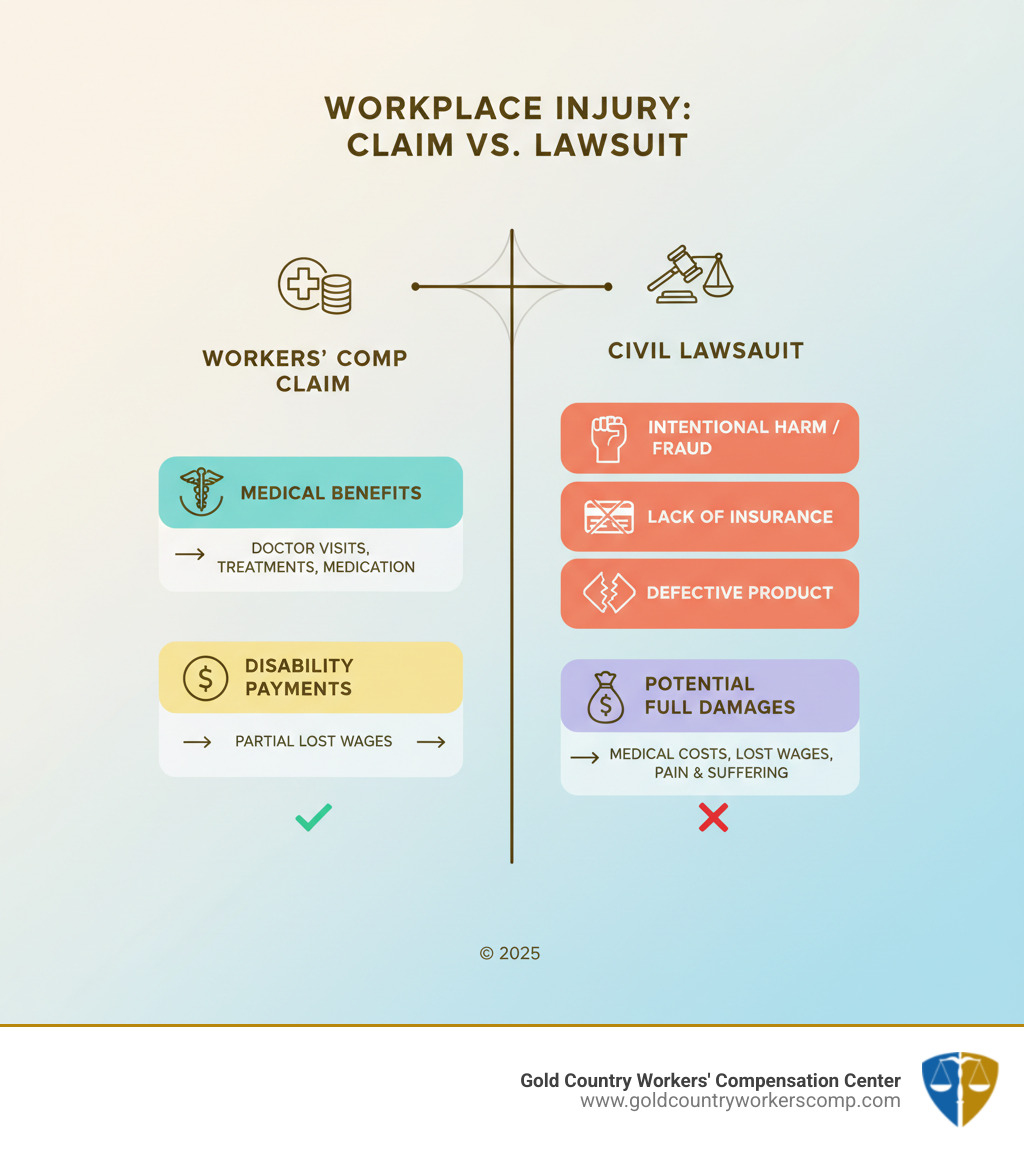
Understanding the exceptions to the exclusive remedy rule is critical. The difference between a workers’ comp claim and a civil lawsuit is significant, affecting the compensation you can receive and what you need to prove. While workers’ comp offers guaranteed medical care and partial wage replacement, a lawsuit can provide far greater compensation but requires proving your employer’s intentional wrongdoing or that another exception applies.

infographic showing two paths: left side shows workers comp claim process with medical benefits and disability payments, right side shows civil lawsuit path with requirements for intentional harm, fraudulent concealment, or lack of insurance, leading to potential full damages including pain and suffering - suing your employer for workers comp infographic

Understanding the “Exclusive Remedy” Rule in California

When you get hurt at work in California, the “exclusive remedy” rule is the foundation of your case. It’s why suing your employer for workers comp is not an option in most cases.

California’s workers’ compensation system is a trade-off. You receive guaranteed, no-fault benefits for medical treatment and lost wages. In exchange, your employer gets immunity from most lawsuits related to workplace injuries. This system provides a critical safety net, but the benefits are limited. You won’t receive compensation for pain and suffering, emotional distress, or punitive damages. Understanding these boundaries is essential. To learn more about how this system protects your rights, visit our page on California Workers Compensation Lawyer.

Can I sue my employer if they were just negligent?

This is a common question. If your employer was guilty of ordinary negligence—like failing to put out a warning sign for a wet floor—you generally cannot sue them. The exclusive remedy barrier applies even if their mistake led to your injury.

The line between ordinary negligence and gross negligence (a severe lack of care or reckless disregard for safety) can be blurry. Proving fault at this higher level is difficult and requires showing that your employer’s actions went far beyond simple carelessness. An experienced attorney can help determine if your case involves more than just ordinary negligence. For information on damages like pain and suffering, see our guide on Can Sue Pain Suffering.

Can I sue a coworker who caused my injury?

Generally, you cannot sue a coworker who injures you while acting within the scope of employment. The workers’ compensation system’s coworker liability shield protects them, just as it protects your employer.

However, exceptions exist. If a coworker intentionally assaults you or their actions were completely unrelated to their job duties, a civil lawsuit may be possible. These complex cases require careful investigation to determine if the coworker’s actions fall outside the protections of the workers’ comp system. If you’re unsure about your case, it’s best to consult an attorney. You can learn more about finding legal help on our Work Injury Attorney Near Me page.

When is Suing Your Employer for Workers Comp a Viable Option?

The exclusive remedy rule has several important exceptions. These are your legal pathways to suing your employer for workers comp outside the standard system. They are narrow and difficult to prove, but they can dramatically change your potential recovery.

gavel and hard hat - suing your employer for workers comp

These exceptions exist for employer conduct so egregious that limiting recovery to workers’ comp benefits would be unjust. Our Workers Compensation Attorneys California team can evaluate your case to see if you have grounds for a civil lawsuit.

Exception 1: Intentional Injury or Assault

If your employer deliberately hurts you, the exclusive remedy rule does not apply. This includes willful physical assault or creating a situation where injury is practically certain to occur. The challenge is proving intent—that your employer acted with a conscious desire to cause harm. If proven, you can sue for full damages, including pain and suffering and punitive damages. A Hurt at Work Lawyer can help you understand your options.

Exception 2: Fraudulent Concealment

You may have grounds for a lawsuit if your employer knew about a dangerous condition, deliberately hid it from you, and that concealment caused your injury. This is more than just failing to warn; it’s active deception, such as falsifying safety reports about toxic substances like asbestos. Proving fraudulent concealment requires showing your employer had actual knowledge of the hidden danger and intentionally concealed it.

Exception 3: Defective Product (Dual Capacity Doctrine)

Sometimes, your employer is also the manufacturer of a product that injured you. Under the dual capacity doctrine, you may be able to sue them for product liability as a manufacturer, separate from their role as your employer. This is common with defective machinery, such as power presses where safety guards were knowingly removed. These cases require proving the injury stemmed from a product defect, not just a workplace condition. A Workplace Injury Lawyer can help steer this complex doctrine.

What if My Employer Lacks Insurance? The Path to Suing Your Employer for Workers Comp

California law requires all employers to carry workers’ comp insurance. If your employer is uninsured, the exclusive remedy rule does not protect them. This is a clear situation where suing your employer for workers comp is a viable option.

You can still receive benefits through the Uninsured Employers Benefit Trust Fund (UEBTF). Crucially, you can also file a civil lawsuit against your uninsured employer for full damages, including pain and suffering. In such a lawsuit, the burden of proof may shift to your employer, and they face severe penalties. Our Workers Comp Lawsuit Help resources can guide you through this process.

Exception 4: Suing a Negligent Third Party

Even if you can’t sue your employer, you may have a claim against a negligent third party. A third party is anyone other than your employer or a coworker. Common examples include:

  • A general contractor or subcontractor on a construction site.
  • The manufacturer of defective equipment that caused your injury.
  • An at-fault driver in a car accident that occurred while you were working.

A third-party lawsuit allows you to recover damages like pain and suffering, which workers’ comp doesn’t cover. While your employer’s insurer may place a lien on your recovery to be reimbursed for benefits paid, a third-party claim often results in a significantly higher total recovery. A Workplace Accident Attorney can help manage both claims.

Workers’ Comp Benefits vs. Lawsuit Damages: A Comparison

Understanding the difference between workers’ compensation benefits and civil lawsuit damages is crucial for your financial future. Workers’ comp provides a valuable but limited safety net. A lawsuit, if you qualify, can provide much fuller compensation.

Think of it this way: workers’ comp covers immediate needs with caps on recovery, while a lawsuit can address the total impact of your injury, including pain and suffering.

Feature Workers’ Compensation Benefits Civil Lawsuit Damages
Proof of Fault Not required (no-fault system) Required (employer’s intentional wrongdoing, gross negligence, third-party fault)
Medical Care Covered (all reasonable and necessary treatment) Covered (all past and future medical expenses)
Lost Wages Partial (typically 2/3 of average weekly wage, up to a cap) Full (past and future lost earnings, including loss of earning capacity)
Pain & Suffering Not covered Covered
Emotional Distress Not covered Covered
Punitive Damages Not covered Possible (in cases of extreme misconduct)
Disfigurement Limited coverage (via permanent disability ratings) Covered
Loss of Consortium Not covered Covered (for spouse/family)
Legal Process Administrative claim with Workers’ Compensation Appeals Board Civil court system
Timeline Generally faster initial benefits Can be much longer and more complex

What Damages Can Be Recovered in a Lawsuit?

If you can sue your employer for workers comp under an exception or pursue a third-party claim, the available damages expand significantly.

  • Economic damages cover your financial losses, including all past and future medical bills, full lost wages, and diminished future earning capacity.
  • Non-economic damages address the human cost of your injury. This includes pain and suffering, emotional distress, disfigurement, and loss of enjoyment of life.
  • Punitive damages are rare and are meant to punish an employer for malicious or fraudulent conduct, not to compensate you for losses.

The difference between these damages and standard workers’ comp benefits can be life-changing. Our team can help you Sue for Damages as a Result of Your Injury.

Common Defenses Employers Use in Injury Lawsuits

When you file a lawsuit, expect the defense to fight back. Common defense strategies include:

  • Comparative negligence: Arguing you were partially at fault to reduce your compensation.
  • Employee misconduct: Claiming you were injured because you violated safety rules.
  • Intoxication defense: Alleging that drugs or alcohol caused the accident.
  • Injury outside scope of employment: Arguing you weren’t “on the clock” when the injury occurred.
  • Statute of limitations: Claiming you missed the legal deadline to file your lawsuit.
  • Lack of intent or knowledge: Denying they knew about a hazard or intended to cause harm in cases involving exceptions to the exclusive remedy rule.

Navigating these defenses requires an experienced legal team that knows how to build a compelling case and counter defense tactics.

After a work injury, the steps you take immediately are critical for protecting your rights, whether you file a standard workers’ comp claim or have grounds to sue your employer for workers comp.

person filling out DWC-1 form - suing your employer for workers comp

Missing a step can jeopardize your claim, so act swiftly.

1. Report Your Injury Immediately

This is the most important first step. You must notify your employer in writing within 30 days of your injury. Even minor injuries should be reported, as they can worsen over time.

  • Notify your supervisor or designated representative.
  • Request and fill out an official incident report.
  • Provide accurate details: when, where, and how the injury occurred.
  • Get contact information for any witnesses.

Prompt reporting establishes a clear timeline for your claim. For more on this, see our First Step Take Injury Important page.

2. Seek Prompt Medical Treatment

Your health is the priority. Get medical attention right away, even if the injury seems minor. A doctor’s diagnosis and treatment plan create the official medical records that are critical evidence for your claim.

  • Go to the emergency room for severe injuries.
  • Follow all of your doctor’s instructions and restrictions.
  • Keep detailed records of all appointments, diagnoses, and treatments.
  • Tell every provider that your injury is work-related.

Delaying treatment can make it harder to prove your injury was work-related. If you’ve been denied care, learn about your options on our Medical Treatment Denied page.

3. File an Official Claim Form

Your employer must give you a Workers’ Compensation Claim Form (DWC-1) within one working day of you reporting your injury.

  • Fill out the DWC-1 form accurately and return it to your employer promptly.
  • Your employer then forwards it to their insurance carrier.
  • The insurer has 90 days to accept or deny your claim. During this time, they must authorize up to $10,000 in medical care.

This form officially starts your claim. If your employer fails to provide it, you can find the official DWC-1 form on the state’s website. Learn more about Making a Workers Comp Claim.

Frequently Asked Questions about Suing an Employer in California

Navigating a work injury claim raises many questions, especially about legal action beyond standard workers’ compensation. Here are answers to some of the most common concerns.

What is the statute of limitations for suing my employer for a work injury?

Filing deadlines are strict and vary by claim type.

  • For a workers’ compensation claim, you generally have one year from the date of injury to file the DWC-1 form. You should also report the injury to your employer within 30 days.
  • For a personal injury lawsuit against your employer (under an exception) or a third party, you typically have two years from the date of injury to file in civil court.

The “findy rule” can sometimes extend these deadlines if your injury or its connection to work wasn’t immediately apparent, but relying on this is risky. The best course of action is to act promptly to protect your rights.

Do I lose my workers’ comp benefits if I file a lawsuit?

No. Filing a civil lawsuit does not automatically disqualify you from receiving workers’ comp benefits. You can often pursue both claims at the same time (concurrent claims). You can receive medical care and disability payments from workers’ comp while your lawsuit proceeds.

However, California law prevents “double recovery.” If you win a settlement or judgment in your lawsuit, the workers’ comp insurance carrier has a right to be reimbursed for the benefits they paid. This is called an employer’s lien. While this reduces your net lawsuit recovery, the total compensation is often still much higher than from workers’ comp alone.

What evidence is needed for a successful lawsuit against an employer?

The burden of proof is on you when you sue your employer for workers comp under an exception. A strong case is built on solid evidence, including:

  • Medical Records: To document the extent of your injuries and connect them to the workplace incident.
  • Accident Reports: Official reports filed with your employer or other agencies create a contemporaneous record of the event.
  • Witness Statements: Testimony from coworkers who saw the incident or can speak to workplace hazards.
  • Photos and Videos: Visual evidence of the accident scene, defective equipment, or your injuries.
  • Employer’s Records: Internal emails, safety reports, or maintenance logs can prove your employer’s knowledge of a hazard.
  • Expert Testimony: Medical, safety, or engineering experts can provide professional opinions to support your claim.
  • Employment Records: Your job description and wage history help establish your financial losses.

Gathering this evidence can be overwhelming. An experienced legal team knows what to look for and how to use it to build the strongest possible case.

The legal landscape for workplace injuries in California is complex. Between the “exclusive remedy” rule and its narrow exceptions, it’s easy to feel overwhelmed while also dealing with pain and financial stress.

The truth is that early legal guidance makes a significant difference. The sooner you consult with an experienced attorney, the better your chances of meeting critical deadlines and pursuing all available compensation, whether through a workers’ comp claim or a civil lawsuit.

That’s where we come in. At Gold Country Workers’ Compensation Center, Kim LaValley and Kyle Adamson have nearly 50 years of combined experience helping injured workers in Roseville, Nevada City, and throughout California. We are committed to ensuring you understand your rights and receive the compensation you deserve.

We believe in early intervention. By contacting us soon after your injury, we can help you avoid common mistakes, gather crucial evidence, and build a strong case from the start. We offer a no-fee initial consultation to give you honest answers about your situation without any upfront cost.

Don’t let uncertainty prevent you from exploring your options. For more information, visit our comprehensive guide: California Workers Compensation Lawyer.

If you have questions about a work injury, contact us today. We’re here to help you move forward with confidence.

Your Roseville SSI Benefits Lawyer A Partner for Your Claim

Roseville SSI benefits lawyer

A Roseville SSI benefits lawyer provides expert legal representation to help individuals steer the complex Supplemental Security Income (SSI) application and appeals process. This federal program is designed to secure disability benefits for those with limited income and resources who are elderly, blind, or disabled.

Quick Guide to Finding SSI Legal Help in Roseville:

  1. Free Consultations – Most SSI lawyers offer no-cost initial case evaluations
  2. No Upfront Fees – Payment only comes from your back pay if you win (capped at 25% or $6,000)
  3. Higher Success Rates – Legal representation significantly improves approval odds, especially at appeal hearings
  4. Local Expertise – Roseville attorneys understand Placer County procedures and local SSA office requirements
  5. Comprehensive Support – Help with applications, medical evidence, appeals, and ALJ hearings

If a disability prevents you from working, the financial strain can be overwhelming. The SSI system is a potential lifeline, but it’s notoriously difficult to steer. An initial application takes 3-5 months for a decision, and most are denied. The subsequent appeals process can stretch for 1-2 years, a period where financial and emotional stress can mount.

This is where a Roseville SSI benefits lawyer becomes an invaluable partner. Research shows that applicants with legal representation have a significantly higher success rate in their appeals and hearings. You don’t need money upfront to hire an SSI lawyer. They work on a contingency fee basis, meaning they only get paid if you win. Their fee is capped by law at 25% of your back pay or $6,000, whichever is less.

Infographic comparing SSI and SSDI: SSI is funded by general tax revenue, requires financial need, does not require work history, and serves elderly/blind/disabled individuals with limited resources. SSDI is funded by Social Security payroll taxes, does not require financial need, requires work credits from employment history, and serves disabled workers who paid into the system. - Roseville SSI benefits lawyer infographic comparison-2-items-formal

Understanding SSI: Eligibility and Key Differences in Roseville

Supplemental Security Income (SSI) is a federal program designed to help elderly, blind, or disabled individuals with limited income and resources. Unlike other Social Security programs, SSI is needs-based, meaning you don’t need a work history to qualify. This makes it a lifeline for many Roseville residents who haven’t been able to work consistently. At Gold Country Workers’ Compensation Center, we help people make sense of the Social Security Administration rules and determine their eligibility.

Who Qualifies for SSI Benefits?

The SSA considers several factors for SSI eligibility:

  • Age, Disability, or Blindness: You must be 65 or older, blind, or have a qualifying disability. A disability is a physical or mental impairment that prevents substantial gainful activity and is expected to last at least 12 months or result in death.
  • Limited Income and Resources: Your countable income and assets must fall below strict federal limits.
  • Citizenship and Residency: You must be a U.S. citizen or eligible noncitizen residing in the U.S.
  • Application: You must file an application and have it approved by the SSA.

A Roseville SSI benefits lawyer can ensure your application is complete and presents your case in the strongest possible light. For more details on local assistance, visit our page on Disability and Social Security Help in Roseville.

SSI vs. SSDI: What Roseville Applicants Need to Know

It’s crucial to understand the difference between SSI and Social Security Disability Insurance (SSDI). While both programs help people with disabilities, SSDI is an insurance program funded by payroll taxes that you pay into through work. SSI is a needs-based safety net funded by general tax revenues.

Criteria Supplemental Security Income (SSI) Social Security Disability Insurance (SSDI)
Funding Source General tax revenues Social Security payroll taxes
Financial Need Required (limited income/resources) Not required (based on work record)
Work History Not required Required (sufficient “work credits”)
Medicare Eligibility May qualify for Medicaid/Medi-Cal Eligible for Medicare after 24 months

Our Roseville SSI benefits lawyer team can help you determine which program fits your situation; some people even qualify for both.

Strict Income and Asset Limits for SSI

Because SSI is needs-based, the SSA imposes strict financial limits.

Countable income includes wages, pensions, unemployment, and even “in-kind” support like free food or shelter. The SSA excludes the first $20 of most income and the first $65 of earned income, plus half of the remainder. California also provides a state supplement to federal SSI payments.

Asset limits are critical. An individual’s countable resources cannot exceed $2,000, and a couple’s limit is $3,000. Not all assets count. Your primary home, one vehicle used for transportation, personal belongings, and household goods are typically excluded. However, cash, bank accounts, and investments do count. A mistake in reporting can lead to denial, making the guidance of a Roseville SSI benefits lawyer invaluable. For more information, you can consult resources like the Social Security Roseville CA office.

The SSI Application and Appeals Gauntlet: A Step-by-Step Guide

Applying for SSI benefits is a challenging process. The initial application takes 3-5 months for a decision, and if denied, the appeals process can last 1-2 years. This is a long time to wait when you’re dealing with a disability and financial hardship. Our firm can guide you through every step.

Person overwhelmed by stack of official-looking forms - Roseville SSI benefits lawyer

The Initial Application Process

A strong application is built on thorough documentation. You will need:

  • Medical Records: Objective proof of your disability, including doctor’s notes, lab results, imaging scans, and treatment plans.
  • Financial Records: Proof of your limited income and resources, such as bank statements and asset information.
  • Personal & Work Information: Your birth certificate, Social Security card, proof of citizenship, and a detailed work history for the past 15 years.

You can apply online, by phone, or in person at a local Social Security office. Our Roseville Social Security Office Appointments Guide can help you prepare for a visit. A Roseville SSI benefits lawyer can review your application to prevent common errors that cause delays or denials.

Common Challenges and Reasons for Denial

Most initial SSI applications are denied, often for fixable reasons:

  • Insufficient Medical Evidence: The SSA requires concrete, objective proof that your condition severely limits your ability to function.
  • Exceeding Financial Limits: Your income or assets are over the strict thresholds.
  • Application Errors: Incomplete forms, inconsistent information, or missing signatures.
  • Failure to Follow Prescribed Treatment: The SSA may conclude your condition isn’t severe if you don’t follow your doctor’s orders without a good, documented reason.
  • Disability Not Severe Enough: The SSA determines your condition doesn’t prevent you from performing any substantial gainful activity.

Properly documented claims for conditions like severe musculoskeletal disorders, mental health conditions (depression, PTSD), neurological disorders (MS, Parkinson’s), cancers, and cardiovascular diseases are often approved. The key is proving the severity of your limitations.

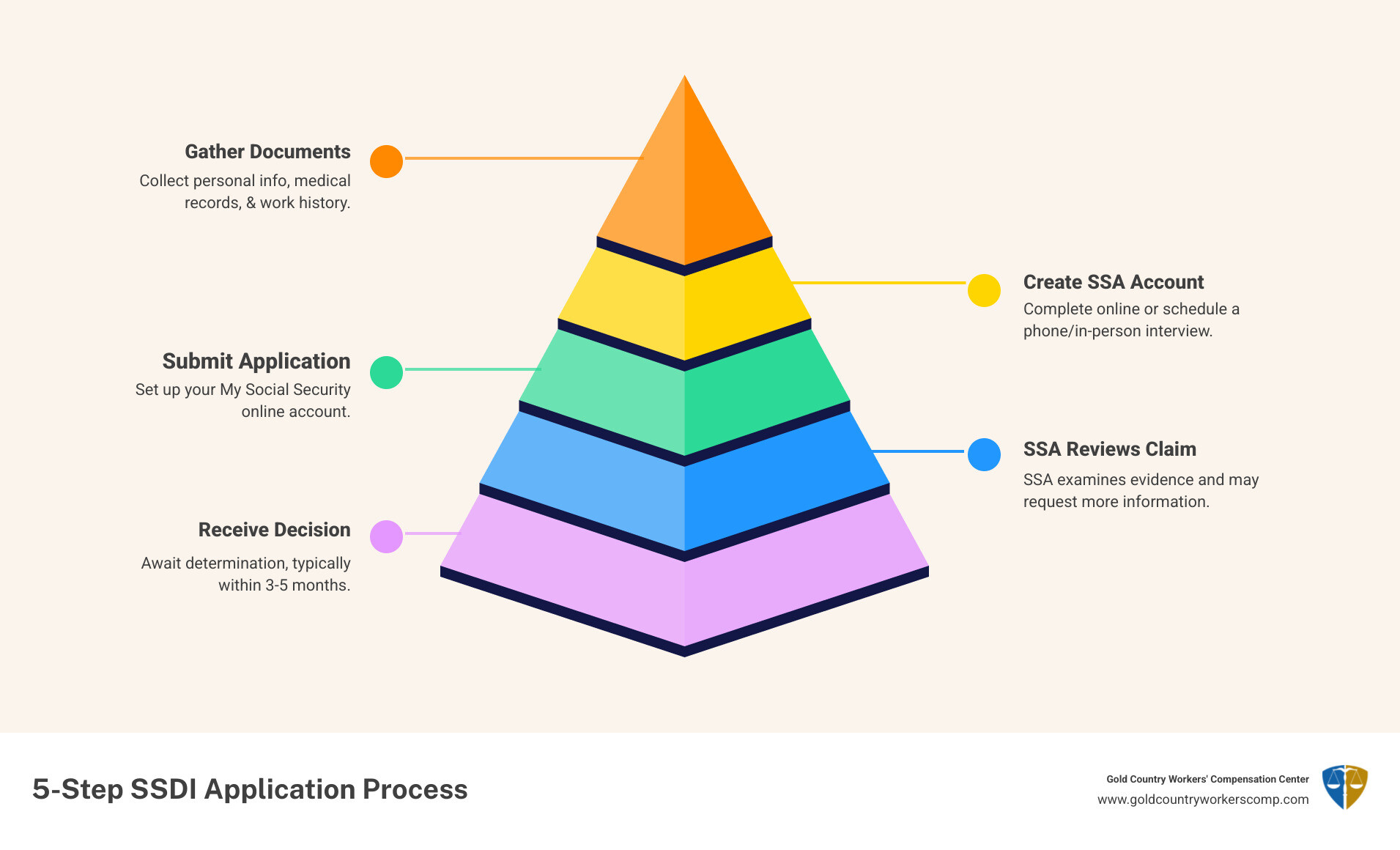
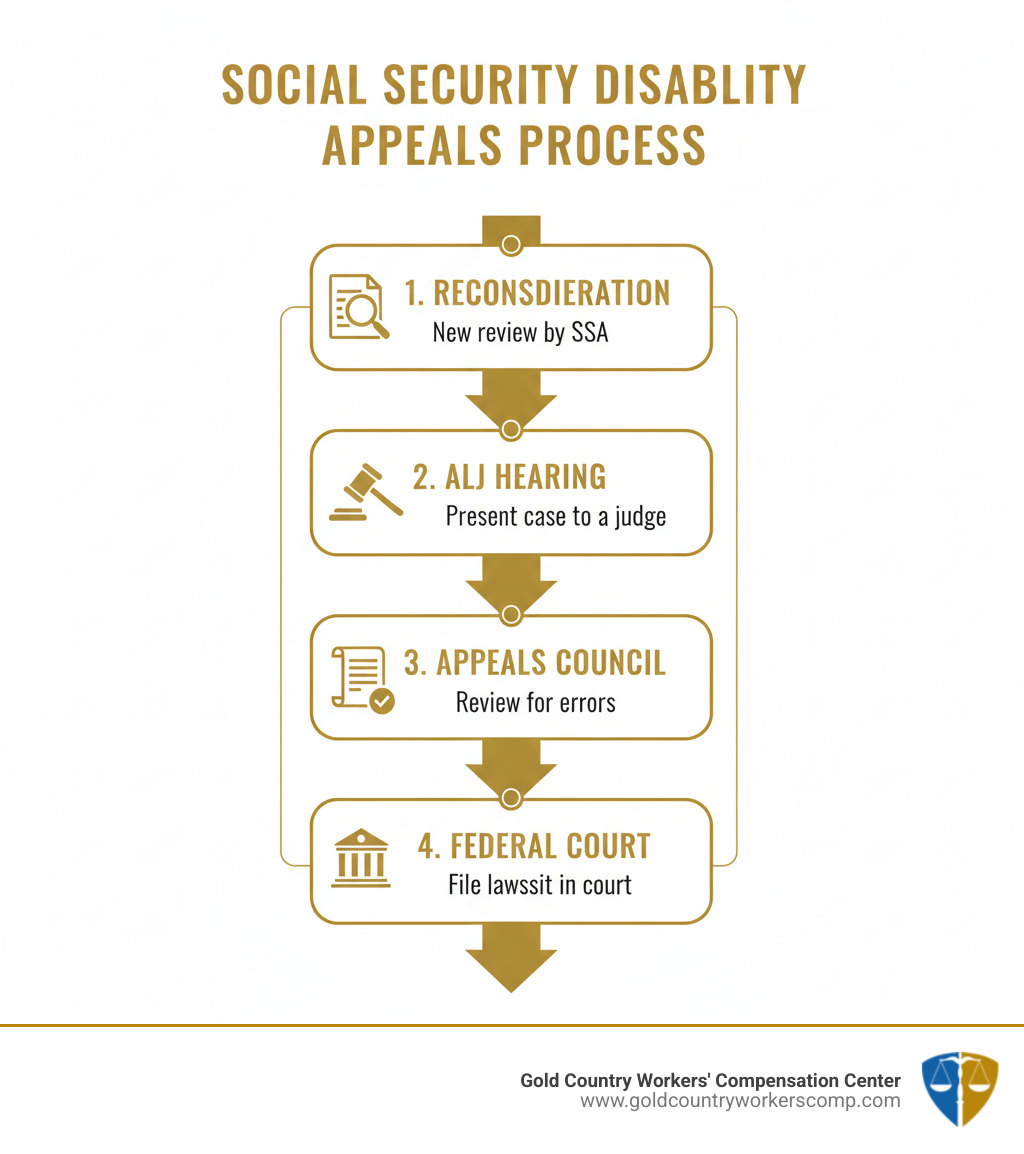
If denied, you have the right to appeal, but you must act within a strict 60-day deadline for each stage.

  1. Reconsideration: A different claims examiner reviews your file and any new evidence. Most reconsiderations are also denied, but this step is required to proceed.
  2. Administrative Law Judge (ALJ) Hearing: This is your best opportunity to win. You present your case in person to a judge, and your lawyer can argue on your behalf and question experts. Success rates are much higher at this stage, especially with legal representation.
  3. Appeals Council Review: If the ALJ denies your claim, you can ask the Appeals Council to review the decision for legal errors.
  4. Federal Court Review: The final step is filing a lawsuit in federal district court, a complex process that requires an experienced attorney.

Our Disability Claim Lawyer in Roseville services are designed to maximize your chances at every level of this process.

Why Partnering with a Roseville SSI Benefits Lawyer Maximizes Your Chances

Statistics show that applicants with legal representation have a much higher chance of winning their SSI claim, especially at the hearing level. The system is a maze of regulations and procedural requirements. A Roseville SSI benefits lawyer acts as your advocate and strategic partner, translating complex medical and legal information into a strong case. At Gold Country Workers’ Compensation Center, our motto is “We Win the Tough Ones,” reflecting our commitment to fighting for our clients.

Lawyer confidently speaking in a hearing room setting - Roseville SSI benefits lawyer

How a Roseville SSI benefits lawyer Can Help with Your Application

Hiring a lawyer from the start can prevent the common pitfalls that lead to initial denials. We help by:

  • Ensuring Accuracy: We review every form to catch errors that could delay or derail your claim.
  • Developing a Case Theory: We present your medical condition in a way that directly addresses the SSA’s legal standards for disability.
  • Handling Communications: We manage all correspondence with the SSA, ensuring timely responses and preventing you from missing crucial requests.
  • Meeting Deadlines: We track all timeframes, especially the critical 60-day deadline for appeals, so you never lose your rights.

For more on how we support clients, visit our Social Security Attorney in Roseville page.

The Lawyer’s Role in a Denied Claim Appeal

If your claim is denied, a lawyer’s role becomes even more critical. We manage the entire appeals process by:

  • Filing Appeals Correctly: We ensure all appeal requests are filed properly and on time.
  • Gathering New Evidence: We identify what’s missing from your file and work to obtain stronger medical records and supportive opinions from doctors.
  • Preparing You for the ALJ Hearing: We walk you through the hearing process, so you know what to expect and can testify with confidence.
  • Cross-Examining Experts: We challenge the testimony of vocational experts the SSA uses to argue that jobs exist for you.
  • Writing Legal Briefs: We submit detailed written arguments to the judge, summarizing the evidence and explaining why you meet the legal standard for disability.

Gathering Medical Evidence and Coordinating with Doctors

A serious diagnosis is not enough; you need the right medical evidence. The SSA needs to see how your condition limits your ability to function. We work with your doctors to obtain supportive medical opinions, often in the form of a Residual Functional Capacity (RFC) assessment. This document details your specific physical and mental limitations, such as how long you can stand, how much you can lift, and your ability to concentrate.

Many doctors are unfamiliar with the SSA’s specific documentation requirements. We bridge this gap by coordinating with your medical team to explain what information is needed. We then analyze these records and translate them into clear legal arguments that address the SSA’s criteria for determining disability. Strong, well-presented medical evidence is the foundation of a successful claim. For more on disability standards, visit the Social Security Disability Insurance website.

Finding Your Advocate and Understanding the Partnership

Choosing a Roseville SSI benefits lawyer is a critical decision. You are looking for an advocate who will partner with you through a long and often stressful process. At Gold Country Workers’ Compensation Center, we build partnerships based on trust, clear communication, and compassion.

Friendly handshake between a lawyer and a client - Roseville SSI benefits lawyer

How are SSI Lawyers Paid? The Contingency Fee Structure

The most common question is, “How much will this cost?” The answer is simple: you pay no upfront fees.

SSI lawyers work on a contingency fee basis, meaning we only get paid if we win your case. If your claim is approved, our fee is paid from your back pay—the past-due benefits owed to you. The Social Security Administration regulates these fees to protect you. The fee is capped at 25% of your retroactive benefits or $6,000, whichever is less. If you don’t win, you owe us no legal fee. This structure ensures everyone can afford quality legal help.

Finding a Reputable Roseville SSI benefits lawyer

When searching for the right advocate, look for:

  • Specialized Experience: Social Security disability law is a complex field. You want an attorney who focuses on these cases, not a general practitioner. Our firm has nearly 50 years of combined experience in this area.
  • Client Reviews: Read testimonials from past clients to learn about their experience with the lawyer’s communication, responsiveness, and results.
  • Credentials: Verify that the lawyer is licensed and in good standing with the State Bar of California.

Our team of Disability Attorneys in Roseville is dedicated to providing the effective representation you need.

What to Expect During Your Initial Consultation

We offer a no-cost initial consultation to make legal help accessible from day one. During this meeting, we will:

  • Listen to your story to understand your disability and how it impacts your life.
  • Review your financial situation to confirm you meet SSI’s needs-based criteria.
  • Explain the application or appeals process, including timelines and potential challenges.
  • Provide clear, straightforward advice about your options.

This meeting is about empowering you with information. There is no obligation to hire us.

Frequently Asked Questions about SSI Claims

We’ve heard countless questions from Roseville residents trying to understand the SSI process. Here are answers to some of the most common ones.

How long does the SSI application and appeal process take in Roseville?

The timeline for an SSI claim is rarely quick. The initial application process typically takes 3-5 months for a decision. If your claim is denied, the appeals process can take 1-2 years, largely due to backlogs at the SSA’s hearing offices. Factors like the complexity of your condition and how quickly your doctors provide records can affect this timeline. A Roseville SSI benefits lawyer can help avoid common delays and keep your case moving as efficiently as possible.

Does having a lawyer guarantee my SSI claim will be approved?

No attorney can ethically guarantee a specific outcome, as the final decision rests with the Social Security Administration. However, statistics are clear: applicants with legal representation have significantly higher success rates, especially at the Administrative Law Judge hearing. An experienced Roseville SSI benefits lawyer understands the SSA’s rules, knows what evidence is needed, and can make persuasive legal arguments on your behalf. Our role is to maximize your chances of success by building the strongest possible case.

Can I work while applying for or receiving SSI benefits?

Yes, but you must be very careful to follow the SSA’s strict earnings limits. The key concept is Substantial Gainful Activity (SGA), a monthly earnings amount that the SSA uses to determine if you are disabled. For 2024, the SGA limit is $1,550 per month for non-blind individuals. Earning over this amount can jeopardize your eligibility.

Even if you earn less than the SGA limit, your SSI payment will be reduced based on your income. The most critical rule is to report all income to the SSA promptly and accurately. Failure to report income can lead to overpayments that you must repay, penalties, or a loss of benefits. The rules are complex, and our team can help you understand them to avoid costly mistakes.

Conclusion

Securing Supplemental Security Income (SSI) benefits in Roseville can be a complex and frustrating journey. The process is long, the rules are strict, and a denial can feel devastating. But these benefits are a crucial lifeline, providing financial stability when a disability prevents you from working.

This is where experience matters. At Gold Country Workers’ Compensation Center, our team, led by Kim LaValley and Kyle Adamson, brings nearly 50 years of combined experience in Disability and Social Security law. We have helped countless residents of Roseville and surrounding California communities steer the system and secure the benefits they deserve.

We believe in early intervention and removing financial barriers to legal help. That’s why we offer a no-cost initial consultation to discuss your case and provide honest advice. Because we work on a contingency fee basis, you only pay a fee if we win your case.

You don’t have to face the SSA alone. Whether you are just starting your application or need to appeal a denial, our team is ready to fight for you. Take the first step toward securing your benefits and peace of mind.

Contact our Disability Law Firm in Roseville for a free consultation, and let a compassionate Roseville SSI benefits lawyer stand by your side.

Work Injury Wisdom: Understanding California’s Compensation System

California workers comp law

Why Every California Worker Needs to Know Their Workers’ Comp Rights

California workers comp law creates a no-fault system that protects both employees and employers when workplace injuries occur. Whether you’re a construction worker, office employee, or restaurant staff member, this law determines what benefits you receive if you’re hurt on the job—and what your employer must provide.

Quick Answer: What is California Workers Comp Law?

California’s workers’ compensation system provides these core protections:

  • Medical Coverage: All necessary treatment for work-related injuries, paid by your employer’s insurance
  • Wage Replacement: Up to two-thirds of your pre-tax wages while you recover (maximum 104 weeks for temporary disability)
  • Permanent Disability: Ongoing payments if you can’t fully return to work
  • Retraining Support: Up to $6,000 voucher for job retraining if you can’t return to your old job
  • No-Fault Protection: You receive benefits regardless of who caused the injury
  • Employer Shield: In exchange, employers are protected from most workplace injury lawsuits

The system is California’s oldest social insurance program, dating back to the 1910s. It operates on a simple trade-off: injured workers get prompt medical care and wage replacement without proving fault, while employers avoid costly lawsuits.

But here’s what most workers don’t realize: the system is complex. Missing a 30-day reporting deadline can jeopardize your claim. Not understanding your rights to choose a doctor can affect your treatment. And employers who fail to carry insurance face penalties up to $100,000—but that doesn’t help you if you’re already injured and they’re uninsured.

This guide breaks down everything you need to know about California workers comp law in plain language. We’ll walk you through who’s covered, what benefits you can receive, how to file a claim, what to do if it’s denied, and when you need professional help.

Infographic showing the California workers' compensation trade-off: On the employee side, an injured worker receives immediate medical care, wage replacement up to two-thirds of salary, permanent disability benefits if needed, and retraining vouchers up to $6,000, all without proving fault. On the employer side, businesses pay for workers' comp insurance but receive protection from employee lawsuits and avoid fault-based liability claims. The center shows a handshake representing this legal agreement that has protected California workers since the 1910s. - California workers comp law infographic

Who is Covered and Who is Obligated?

Understanding who needs workers’ compensation coverage in California is essential for any business. It’s about following the law and protecting your employees and your business from devastating financial consequences.

small business owner looking at an official notice - California workers comp law

Here’s the bottom line: if you have even one employee in California, you must carry workers’ compensation insurance. This applies whether they are full-time, part-time, or temporary. The moment you hire someone, you are legally required to have coverage.

California workers comp law defines an employee broadly, including full-time, part-time, temporary, seasonal workers, and minors. If someone works for you for wages, they are almost certainly covered.

Most businesses buy a policy from a licensed carrier. Larger companies meeting strict financial requirements may qualify for self-insurance, with approval from the Department of Industrial Relations, Office of Self-Insurance Plans. Out-of-state employers with employees regularly working in California must also have California workers’ comp coverage. The location of the work, not the headquarters, dictates the requirement.

Understanding Exemptions from California Workers Comp Law

Certain individuals are exempt from coverage, which can be a point of confusion for business owners.

Sole proprietors and single-member LLCs with no employees are not required to have workers’ comp for themselves. However, the moment you hire anyone, even part-time, you need coverage.

Corporate officers who own their corporation, partners in a partnership, and members of an LLC can sometimes elect to exclude themselves from coverage. However, any employees they hire must be covered.

Roofing contractors are a notable exception: they must carry workers’ compensation insurance even if they have no employees, due to the hazardous nature of the work.

The independent contractor distinction is tricky. True independent contractors are not covered, but misclassifying an employee as one can lead to serious legal trouble. The classification depends on the actual working relationship (control over work, tools provided, etc.), not just a contract.

Volunteers for nonprofit organizations are typically not covered, but if they receive payment beyond expense reimbursement, they may be considered employees.

Employer Responsibilities at a Glance

Once you have coverage, you must fulfill several key obligations:

Purchase the right insurance. Your policy must meet California’s minimum requirements: $100,000 per occurrence, $100,000 per employee, and $500,000 total policy value. Never let your coverage lapse.

Post the required notices. Display the official “Notice to Employees” poster in a visible area, like a break room. This poster explains their workers’ comp rights.

Give new hires the information they need. Provide every new employee with a pamphlet explaining workers’ compensation benefits and procedures.

Respond immediately when someone gets hurt. You have one working day to provide an injured employee with a claim form (DWC-1) after they report an injury.

Authorize medical treatment right away. Within one working day of receiving the claim form, you must authorize up to $10,000 in medical care while the claim is investigated.

Following these rules is crucial. It ensures injured workers get the care they need and protects businesses from costly penalties and lawsuits.

A Complete Guide to Workers’ Compensation Benefits

When you’re hurt at work, your first thought is probably “how am I going to pay my bills?” or “who’s going to cover my medical treatment?” The good news is that California workers comp law was designed exactly for these moments. The system provides five main types of benefits to help you through recovery and beyond.

five main workers' compensation benefit categories - California workers comp law

Medical Treatment and Care

The first thing you need after a work injury is proper medical care, and your employer’s workers’ compensation insurance must cover all treatment reasonably required to cure or relieve the effects of your injury. This isn’t just a quick doctor’s visit—it’s comprehensive care.

Your medical benefits cover physician visits with doctors, specialists, and surgeons. They cover hospital services including emergency room care, hospital stays, and any surgical procedures you need. Prescription drugs that treat your injury are covered, along with medical equipment like crutches, wheelchairs, or braces. Diagnostic work such as lab tests and X-rays fall under coverage too, as does physical therapy and rehabilitation to help you regain function.

Here’s something many workers don’t realize: you can even get reimbursed for travel costs to and from medical appointments. As of January 1, 2025, that’s 70 cents per mile. It might not sound like much, but those miles add up when you’re making multiple trips to specialists.

Now, there’s a catch that trips up some people. Many employers use what’s called a Medical Provider Network (MPN) or Health Care Organization (HCO). These are groups of healthcare providers that the insurance company contracts with. If your employer has an MPN, you’ll generally need to choose a doctor from that network.

But here’s where you have some control: you might have the right to predesignate a personal physician to treat your work injury if you meet certain conditions before the injury happens. This means if you have a doctor you trust, you can potentially designate them in advance. For the full details on medical care rights, the California Labor Code on medical care spells it all out.

Disability and Wage Replacement Payments

Missing work because of an injury is stressful enough without worrying about how you’ll pay rent. That’s where disability payments come in under California workers comp law.

Temporary Disability (TD) payments replace wages you lose while you’re recovering and can’t work. The calculation is straightforward: you receive two-thirds (66.67%) of your average pre-tax weekly wage. Of course, there are state-mandated minimum and maximum amounts. For injuries after January 1, 2021, the maximum weekly benefit is $1,356.31.

These payments typically last up to 104 weeks within a five-year period from your injury date. That’s just over two years of coverage. However, if you suffer certain severe conditions—think HIV, severe burns, or amputation—temporary disability can extend up to 240 weeks. You can read more about temporary disability payments in the Labor Code.

But what happens if your injury leaves lasting effects? That’s where Permanent Disability (PD) payments come in. If your injury results in a lasting impairment that reduces your earning capacity even after you’ve reached maximum medical improvement (when your doctor says you’re as healed as you’re going to get), you may receive permanent disability benefits.

The amount and duration depend on your disability rating, which is determined by a specific rating schedule. This rating considers the nature of your injury, your age, your occupation, and any work restrictions your doctor imposes. It’s a complex calculation, but it’s designed to compensate you fairly for your reduced earning capacity.

For the most severe cases—disabilities rated between 70% and 99%—California provides a life pension. This means you receive ongoing payments for the rest of your life, recognizing that some injuries fundamentally change your ability to earn a living.

Retraining and Other Financial Support

Sometimes an injury doesn’t just sideline you temporarily—it changes your career path entirely. California workers comp law recognizes this reality and offers programs to help you transition.

The Supplemental Job Displacement Benefit (SJDB) provides a $6,000 voucher if your permanent work injury prevents you from returning to your old job and your employer doesn’t offer you modified or alternative work. This isn’t cash in your pocket, but rather a voucher you can use for education-related retraining at state-approved schools, skill improvement courses, or even tools and equipment necessary for a new career. Think of it as a bridge to your next chapter.

There’s also the Return-to-Work Supplement Program (RTWSP) for injuries on or after January 1, 2013. If you received an SJDB voucher and experienced a disproportionate loss of earnings, you may qualify for a one-time supplemental payment administered by the Department of Industrial Relations. It’s designed to help bridge that financial gap when your new career doesn’t quite match your old earning power.

Now, California workers comp law is meant to be your primary safety net for work injuries, but it’s not the only program out there. State Disability Insurance (SDI) is a state program that provides short-term wage replacement for non-work-related illnesses or injuries. Sometimes it can complement workers’ comp benefits, or serve as a fallback if your workers’ comp claim gets denied.

For truly severe, long-term disabilities, Social Security Disability Insurance (SSDI) might be available. This federal program kicks in if your work injury results in a total disability that prevents you from performing any substantial gainful activity. The qualification standards are different from workers’ comp, but it’s worth exploring if your injury is that severe.

Finally, here’s something most people don’t think about: third-party lawsuits. If your injury was caused by someone other than your employer—say, a defective piece of equipment or another company’s negligent driver—you might be able to pursue a personal injury lawsuit against that third party. This is separate from your workers’ comp claim and could provide additional compensation. It’s rare, but when it applies, it can make a significant difference in your recovery, both physical and financial.

Here’s the truth: knowing what benefits you’re entitled to is one thing, but actually getting them requires navigating a process that can feel overwhelming when you’re already dealing with pain and uncertainty. The good news? Once you understand the steps, it becomes much more manageable.

flowchart of the workers' compensation claim process from injury to resolution - California workers comp law infographic

What to Do Immediately After a Work Injury

The actions you take in those first hours and days after an injury can make or break your claim. Let’s walk through what needs to happen.

Your health comes first, always. If you need immediate medical attention, get it right away. Don’t wait, don’t second-guess yourself, and don’t let anyone tell you to “tough it out.” When you’re being treated, make sure you tell the medical staff that your injury happened at work. This simple statement creates a medical record that links your injury to your job.

Next, tell your supervisor what happened. This notification should happen as soon as possible—ideally the same day. Even if the injury seems minor, report it. Many serious conditions start as small problems that worsen over time.

While a quick verbal heads-up gets things started, California workers comp law requires something more formal: written notice to your employer within 30 days of your injury. This doesn’t have to be fancy—a simple written statement describing when, where, and how you were injured is enough. But this written notice is crucial. It creates a paper trail and starts the legal clock ticking on your claim.

Finally, ask your employer for a claim form. They’re legally required to give you a DWC-1 form within one working day of learning about your injury. If they drag their feet or refuse, you can download the DWC-1 Claim Form yourself from the state website.

Key Deadlines Under California Workers Comp Law

Here’s where things get serious. Workers’ compensation runs on strict deadlines, and missing them can cost you everything. These aren’t flexible guidelines—they’re legal requirements that the system takes very seriously.

You have 30 days to give written notice of your injury to your employer after it happens. Yes, we mentioned this above, but it bears repeating because it’s that important. While there are rare exceptions for delayed findy of certain injuries or illnesses, don’t count on them. Get that written notice in as soon as possible.

Your employer has one day to provide or mail you the claim form once they know about your injury. One day. Not a week, not “when we get around to it.” This requirement ensures injured workers can start the claims process immediately.

You have one year to file your completed claim form from the date of injury. This is your window to formally submit your DWC-1 to your employer. A smart move? Submit it in person and get a stamped copy as proof, or send it via certified mail with return receipt requested. Either way, you’ll have documentation that you met this deadline.

The insurance company gets 90 days to investigate your claim and decide whether to accept or deny it. This investigation period is significant because if they don’t formally deny your claim within these 90 days, there’s a presumption that your injury is work-related and covered. The burden then shifts to them to prove otherwise.

What Happens After You File a Claim?

Once you’ve submitted your DWC-1 form, several things happen simultaneously. Understanding this phase helps you know what to expect and what to watch for.

Medical treatment must be authorized within one day of your employer receiving the claim form. This is one of the most worker-friendly aspects of California workers comp law. You don’t have to wait weeks or months to see a doctor—treatment authorization happens immediately.

While the insurance company investigates your claim, you can receive up to $10,000 in medical care. This ensures you’re not stuck in limbo, unable to get treatment while bureaucrats shuffle papers. You’re getting the care you need, and the bills are being paid, even before the claim is officially accepted.

That 90-day investigation period we mentioned? It creates what’s called a presumption of compensability. Essentially, if the insurance company doesn’t actively deny your claim within those 90 days, the law assumes your injury is work-related and covered. This doesn’t mean they can never challenge it, but it puts you in a much stronger position.

During your treatment, you might encounter something called Utilization Review (UR). This is where the claims administrator reviews your doctor’s treatment recommendations to make sure they’re medically necessary and appropriate. If your doctor requests a specific procedure or medication and the UR process denies it, that decision can be appealed through an Independent Medical Review (IMR), where an independent medical expert makes the final call.

Throughout this process, you’ll work with a claims administrator who manages your case for the insurance company. Keep detailed records of every phone call, every letter, every medical appointment. Save emails. Take notes during phone conversations, including the date, time, and name of who you spoke with. This documentation becomes invaluable if disputes arise later.

The claims process isn’t always smooth, but knowing these steps gives you a roadmap through what can otherwise feel like a confusing journey. And remember, you don’t have to steer it alone—experienced workers’ compensation attorneys have guided thousands of injured workers through this exact process.

When a Claim is Denied: The Appeals and Settlement Process

A denied claim can feel like a punch to the gut, especially when you’re already dealing with an injury. But here’s the truth: a denial isn’t the final word. It’s actually quite common for claims to be challenged, and the system has built-in protections to ensure you get a fair hearing.

gavel and legal documents - California workers comp law

Insurance companies deny claims for all sorts of reasons. Sometimes they dispute whether your injury really happened at work. Other times, they’ll argue there isn’t enough medical evidence linking your condition to your job. We’ve seen denials based on missed deadlines, disputed medical opinions, and even social media posts that the insurer claims contradict your injury. The company might send you to their own doctor who conveniently finds nothing wrong.

But California workers comp law gives you powerful tools to fight back. The Workers’ Compensation Appeals Board (WCAB) exists specifically to resolve these disputes. Think of it as your safety net when the insurance company says no.

Challenging a Denied Claim

When you decide to challenge a denial, you’re essentially taking your case to court—but it’s a specialized court designed specifically for workers’ compensation disputes. The process has several stages, and understanding them helps take away some of the mystery.

First, you’ll file an Application for Adjudication of Claim with the WCAB. This formal document opens your case and puts everyone on notice that you’re disputing the denial. You can find guidance on required documents through the Division of Workers’ Compensation.

Next comes the Declaration of Readiness to Proceed. This tells the judge that you’ve gathered your evidence, completed your medical treatment (or reached a point where you know what your permanent disability is), and you’re ready to move forward. You can access the Declaration of Readiness to Proceed form online.

Before any trial happens, your case will be scheduled for a Mandatory Settlement Conference (MSC). The word “mandatory” is key here—everyone has to show up and genuinely try to resolve the dispute. A workers’ compensation judge facilitates this informal meeting between you (and your attorney, if you have one), the claims administrator, and their attorney. The judge will hear both sides and often provide their opinion on the case’s strengths and weaknesses. Many cases settle at this stage because everyone gets a reality check about what might happen at trial.

If settlement talks break down, you’ll proceed to the trial process. Don’t let the word “trial” intimidate you. Workers’ comp trials are less formal than regular court trials. You’ll present your evidence—medical records, testimony from doctors, your own testimony about how the injury happened and affects your life. The insurance company will present their side. A workers’ compensation judge will hear everything and make a decision based on the evidence.

Even after a judge’s decision, you’re not out of options. If you disagree with the ruling, you can file a Petition for Reconsideration. This asks a panel of commissioners at the WCAB to review the judge’s decision for legal or factual errors.

This entire process can feel overwhelming, which is exactly why many injured workers in Nevada City, Grass Valley, and throughout Northern California reach out to experienced attorneys who know how to steer these waters.

Understanding Workers’ Comp Settlements

Here’s some good news: most workers’ compensation cases don’t drag through a full trial. The vast majority settle, often at that Mandatory Settlement Conference. But settlements aren’t one-size-fits-all. California workers comp law recognizes two main types, and understanding the difference is crucial.

Settlement Type Description Key Features
Stipulated Findings and Award (Stips) You and the insurance company agree on the nature and extent of your injury and the benefits you’ll receive. The judge approves this agreement and issues an award. You continue to receive medical treatment for your injury for life if needed. Disability payments may be structured over time or paid as a lump sum. You can reopen the case later if your condition worsens.
Compromise and Release (C&R) A final settlement where you receive a lump-sum payment in exchange for closing your case completely. You give up the right to future medical treatment through workers’ comp for this injury. The case is permanently closed—you cannot reopen it later. Typically results in a larger immediate payment.

Stipulations with Request for Award (commonly called “Stips”) keep your case technically open. This matters because if your back injury that settled three years ago suddenly gets worse, you can potentially reopen your case and receive additional benefits. You also maintain your right to medical treatment for that injury for the rest of your life. The insurance company remains responsible for covering doctor visits, medications, and procedures related to your work injury.

Compromise and Release agreements (C&R) are different animals entirely. You’re agreeing to a final, lump-sum payment in exchange for walking away from your claim forever. Once a C&R is approved by a judge, that’s it. You cannot come back later for more medical treatment or additional disability payments, even if your condition deteriorates. The trade-off is that C&R settlements often result in larger immediate payments because the insurance company values the certainty of closing the case forever.

Which type of settlement makes sense depends entirely on your situation. Are you young with a serious back injury that might need surgery down the road? A Stips agreement might protect you better. Are you older, ready to move on, and confident you won’t need future treatment? A C&R might give you more money upfront.

These decisions have life-long consequences, which is why having someone in your corner who understands California workers comp law inside and out can make all the difference between a fair settlement and one you’ll regret years later.