

Once you report a workplace injury in California, a formal claims process begins — one that involves your employer, their insurance carrier, and the state’s Division of Workers‘ Compensation. You have specific rights at every step: to medical care, wage replacement, and a fair evaluation of your injury. Understanding what happens next can make the difference between a smooth process and a prolonged fight.
- Your employer is required by California law to provide you a DWC-1 claim form within one working day of learning about your injury.
- The insurance company has 90 days to accept or deny your claim — and you have rights during that entire window.
- Medical treatment begins quickly, often before the claim is formally approved.
- Early legal support can protect you from common pitfalls that reduce or delay your benefits.
- Injured workers in Nevada County, Placer County, El Dorado County, and surrounding Gold Country communities have local resources available to them.
The First 24 Hours: What Your Employer Must Do
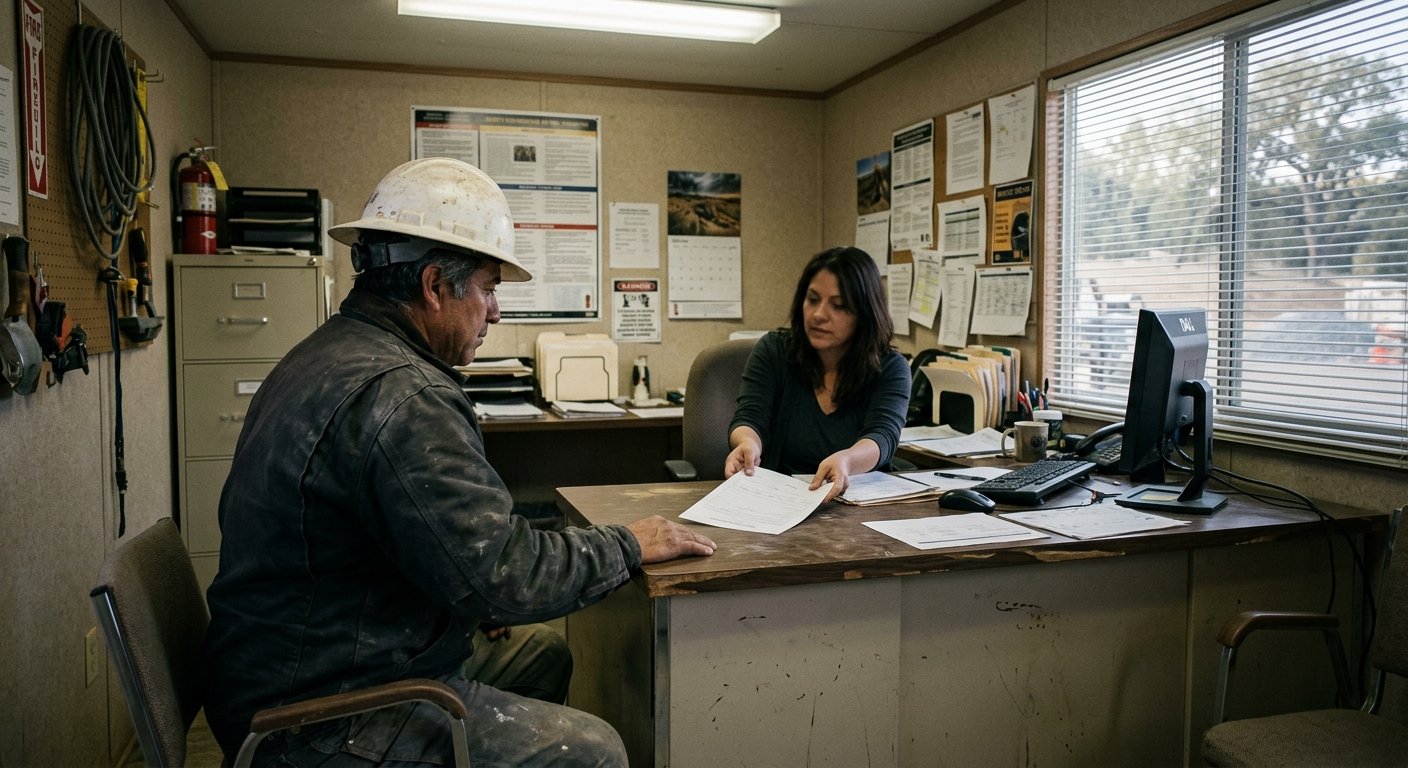
The moment you tell your employer about a workplace injury, a legal clock starts ticking. California law requires your employer to give you a DWC-1 claim form — the official Workers’ Compensation Claim Form — within one working day. This form is your formal notification to the workers’ comp system that an injury occurred. Fill it out completely and keep a copy for yourself before returning it.
At the same time, your employer is required to authorize medical treatment while your claim is being processed. You should not have to wait for a claim decision before seeing a doctor. Under California’s workers’ comp system, up to $10,000 in medical treatment must be provided to you while the insurance company evaluates your claim, according to the California Department of Industrial Relations.
If your employer discourages you from filing a DWC-1 form, pressures you to use personal health insurance instead, or tells you the injury “doesn’t qualify,” those are red flags. You have a protected right to file a workers’ comp claim. Retaliation for filing is illegal under California Labor Code Section 132a.
What the Insurance Company Does Next

Once you submit your DWC-1 form, your employer’s workers’ compensation insurer takes over much of the process. They will assign a claims adjuster to your case and begin an investigation. Here is the timeline that governs their response:
Claim Acknowledgment
The insurer must acknowledge receiving your claim within 14 days and begin their investigation promptly.
Temporary Disability Payments
If your injury keeps you from working, temporary disability (TD) benefits should begin within 14 days of the insurer being notified of your lost wages. TD pays a portion of your average weekly earnings while you recover.
Accept or Deny Decision
The insurer has 90 days to formally accept or deny your claim. If they take no action within 90 days, the injury is presumed compensable under California law — meaning it’s considered accepted.
Medical Evaluation (If Disputed)
If the insurer disputes the extent of your injury, they may request a medical evaluation through a Qualified Medical Evaluator (QME) — a physician certified by the state to assess disputed claims.
Medical Care: Your Right to Treatment

One of the most stressful parts of the workers’ comp process after injury is not knowing whether your medical bills will be covered. In California, all necessary medical treatment related to your work injury is covered by workers’ comp — with no out-of-pocket cost to you.
However, the insurer controls your medical care through a system called Utilization Review (UR). This means a doctor hired by the insurer reviews and must approve treatment your own physician recommends. If UR denies treatment you need, you have the right to appeal through Independent Medical Review (IMR), an independent process overseen by the state.
If you pre-designated a personal physician before your injury — meaning you told your employer in writing that you wanted to see your own doctor if you were ever injured — you may have more flexibility in choosing your treating physician. The DWC-1 claim form is where this process formally begins.
The insurer controls your medical care — but California law also gives you the right to challenge every denial.
What Happens If Your Claim Is Denied?
A claim denial is not the end of the road. In California, you have the right to appeal a denial through the Workers’ Compensation Appeals Board (WCAB), which is a state body that hears disputed workers’ comp cases. You can file a Declaration of Readiness to Proceed and request a hearing before a workers’ comp judge.
This is where having a workers’ compensation specialist in your corner becomes especially important. Navigating the WCAB, gathering medical evidence, and presenting your case effectively is genuinely difficult without guidance. Many claims that are initially denied are later approved — but the appeals process has deadlines and procedural requirements that can trip up injured workers who go it alone.
Contacting a workers’ compensation specialist early — even before your claim is denied — gives you the best chance at a fair outcome. A specialist can catch problems before they become obstacles and help you respond to the insurance company’s tactics with confidence.
Permanent Disability and Long-Term Benefits
Once your doctor determines you have reached Maximum Medical Improvement (MMI) — meaning your condition has stabilized — your case moves toward resolution. If your injury left you with lasting limitations, you may be entitled to Permanent Disability (PD) benefits.
The PD rating is assigned based on a formal evaluation of your functional limitations and is expressed as a percentage. That percentage directly affects the amount of permanent disability benefits you receive. Ratings can be disputed, and if the insurer’s doctor and your treating physician disagree, an Agreed Medical Evaluator (AME) — a physician both sides agree on — or a QME may be brought in to resolve the dispute.
If your injury prevents you from returning to your previous job long-term, you may also qualify for Supplemental Job Displacement Benefits (SJDB), which provide a voucher for retraining or education. For workers whose injuries are severe enough to prevent any substantial work, Social Security Disability Insurance (SSDI) may be a parallel path worth exploring. The Social Security Administration outlines eligibility and the application process on their website.
| Benefit Type | Who Qualifies | When It Applies |
|---|---|---|
| Temporary Disability (TD) | Workers unable to work during recovery | During active medical treatment |
| Permanent Disability (PD) | Workers with lasting functional limitations | After Maximum Medical Improvement |
| Supplemental Job Displacement | Workers who can’t return to prior job | After PD rating is assigned |
| SSDI | Workers unable to perform any substantial work | When long-term disability prevents employment |
Frequently Asked Questions
How long does the workers’ comp process take after I report an injury in California?
Timelines vary based on the complexity of your injury and whether your claim is disputed. Simple claims can resolve in a few months, while disputed claims involving permanent disability ratings or appeals can take a year or longer. Filing your DWC-1 form promptly and getting legal support early helps avoid unnecessary delays.
Can my employer fire me for reporting a work injury?
Retaliation for filing a workers’ comp claim is illegal under California Labor Code Section 132a. If you experience demotion, termination, or other adverse action after filing a claim, you may have additional legal remedies. Document any changes in your employment situation immediately after reporting your injury.
What is a QME and when does one get involved?
A Qualified Medical Evaluator (QME) is a physician certified by the California Division of Workers’ Compensation to conduct independent medical assessments when a claim is disputed. A QME becomes involved when the insurer challenges the nature or extent of your injury, or when the treating physician’s conclusions are contested.
What if I can’t afford to take time off work while recovering?
Temporary Disability (TD) benefits are designed to replace a portion of your lost wages while you recover. California workers’ comp TD benefits are calculated based on your average weekly earnings before the injury. If payments are delayed or denied, a workers’ compensation specialist can help you push for timely payment.
Do I need a lawyer to file a workers’ comp claim in California?
You are not required to have legal representation to file, but having a workers’ compensation specialist significantly improves your ability to navigate disputes, appeals, and medical evaluations. If your claim is denied or your employer’s insurer is pushing back, professional guidance is strongly advisable.
Serving Injured Workers Across Gold Country and Northern California
At Gold Country Workers’ Comp Center, our workers’ compensation specialists work exclusively with injured workers — people in Nevada County, Placer County, El Dorado County, Yuba County, and throughout the Sacramento foothills who are trying to make sense of a confusing and often stressful process. Whether you work in construction in Auburn, forestry near Grass Valley, manufacturing in the Sacramento area, or any physically demanding job in between, you deserve clear answers and strong support from day one.
The workers’ comp process after injury in California has real deadlines and real consequences for missing them. Getting guidance early — before mistakes happen — protects your claim and your livelihood.
Talk to a Workers’ Comp Specialist Today
A free consultation costs you nothing and gives you clarity on exactly where your claim stands and what to do next.

About Gold Country Workers' Comp Center
Gold Country Workers' Comp Center provides workers' compensation services to injured workers and employers navigating the claims process. The business focuses on guiding clients through the complexities of workers' comp with clarity and support. Their approach centers on accessible, straightforward assistance for those dealing with workplace injuries and related benefits. Visit goldcountryworkerscomp.com →


